How to Build Credit Fast: A Realistic 90-Day Plan That Actually Works
I’ve been doing credit repair since 2009. Seventeen years, more than 28,000 clients. So when someone asks me how to build credit fast, I know exactly where this is going. They watched a video that promised 100 points in a weekend. That’s a lie. Run from anyone who says it.
But here’s the real news. You can move your score meaningfully in 30 to 90 days. Not magic. Just the right levers pulled in the right order. Let me walk you through what actually works and what’s a waste of time.
What “Fast” Actually Means
Your credit score is built from a few things. Payment history is the biggest chunk. Then how much of your available credit you’re using. Then the age of your accounts, your mix of account types, and recent inquiries.
The fast levers touch the parts that update every single month. The slow levers touch the parts that take years. You want to attack the fast ones first.
Fast: utilization and adding a positive tradeline. These can show up in 30 to 60 days.
Slow: average age of accounts and payment history depth. No trick speeds these up. Time does.
So when we talk fast, we’re talking about utilization timing and adding good accounts. That’s the whole game in the first 90 days.
Lever 1: Utilization and the Statement-Date Trick
This is the single fastest thing most people can do, and almost nobody knows it.
Your card reports a balance to the bureaus once a month. Usually on your statement closing date, not your due date. Most people think paying by the due date is enough. It is, for avoiding interest and late marks. But the balance that gets reported is whatever sits on the card when the statement closes.
So if you charge $800 on a $1,000 card and pay it off two days after the statement closes, the bureaus still see $800 reported. That’s 80% utilization. It tanks your score even though you paid in full.
The fix: pay the card down to a small balance BEFORE the statement closes. Not before the due date. Before the closing date. Log in, find your statement date, and pay it down a few days ahead so the reported balance is low.
Aim for under 10% utilization on each card and overall. Leaving a tiny balance, like 1% to 9%, often scores slightly better than reporting zero across the board. So don’t zero out every card. Let one report a small balance.
This one move alone has jumped people 20 to 40 points in a single reporting cycle. No money spent. Just timing.
Lever 2: Become an Authorized User
If you have a parent, spouse, or close family member with an old card, low balance, and perfect payment history, ask to be added as an authorized user.
You don’t need their card. You don’t even need to spend a dime. Their account history can get added to your report, and a long, clean account makes your file look older and stronger.
This is one of the few legit shortcuts to fixing a thin credit file fast. Just make sure the account is in good shape. If their card is maxed out or has late payments, it’ll hurt you, not help. Vet it first.
Lever 3: Open a Secured Card or Credit-Builder Loan
If you’ve got nothing on your report, you need to start adding positive accounts. Two clean tools for this.
A secured card. You put down a deposit, say $200 to $500, and that becomes your limit. You use it like a normal card. The bank reports it to all three bureaus. Use it for one small recurring bill, pay it down before the statement closes, done.
A credit-builder loan. The bank holds the loan amount in an account, you make small monthly payments, and at the end you get the money back. Every on-time payment reports as a positive. It’s basically a forced savings plan that builds payment history.
Pick one based on your situation. If your problem is no revolving credit, get the secured card. If it’s no installment history at all, the builder loan adds the missing account type.
Lever 4: On-Time Payments Are the Foundation
None of the above matters if you miss a payment. Payment history is the biggest single piece of your score, and one 30-day late mark can drop you 60 to 100 points and sit on your report for years.
Set autopay for at least the minimum on everything. Then pay the rest manually to control your utilization timing. Autopay is your safety net so a busy week never costs you 80 points.
This isn’t a fast lever. It’s the floor everything else stands on. Skip it and the rest is pointless.
A Rough 90-Day Sequence
Here’s how I’d run it.
Days 1 to 7. Pull all three reports. Find the statement closing date on every card. Set autopay for minimums. Ask a family member about authorized user status.
Days 8 to 30. Pay every card down below 10% before its statement date. Open a secured card or credit-builder loan if your file is thin. Get added as an authorized user if that option came through.
Days 30 to 60. Your first low-utilization balances and new accounts start reporting. This is where the first jump usually shows. Keep utilization low. Keep paying on time. Don’t open anything else.
Days 60 to 90. The new tradelines have a couple months of history. Authorized user history is showing. Your score should reflect real movement now. Stay disciplined.
What won’t be done in 90 days: account age and deep payment history. Those keep building for years. That’s fine. You’ve set the foundation.
The Mistakes That Stall People
Closing old cards. That card you never use is helping you, age and available credit. Closing it can spike your utilization and shorten your history. Leave it open, put one small subscription on it, autopay it.
Applying for everything at once. Every application is a hard inquiry, and a pile of them in a short window screams desperation to lenders. Be deliberate. One or two accounts, then stop.
Paying after the statement closes. We covered this. Paying the balance in full is great, but if it reports high first, you already lost the points that month.
Chasing a “credit repair” promise of overnight miracles. Anyone guaranteeing a specific number by a specific weekend is selling a fantasy. Real movement comes from the boring stuff done consistently.
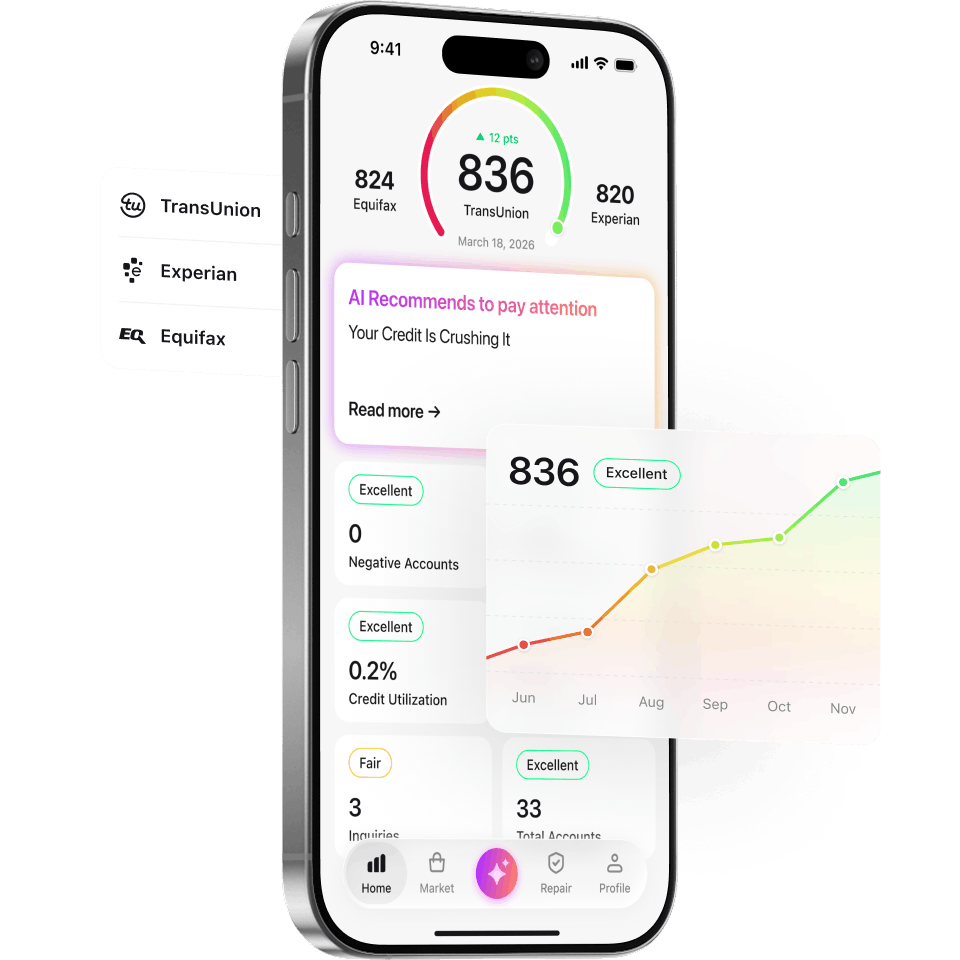
You don’t need to guess your way through this. Credit Booster AI reads your actual report, shows you exactly which levers will move your score the most, and walks you through the 90-day plan step by step. Start at creditbooster.ai and see what your file actually needs.
Frequently Asked Questions
How fast can my credit score actually go up?
With the statement-date trick and a clean new tradeline, real movement in 30 to 60 days is realistic. Most people see the first meaningful jump after one or two reporting cycles. Big structural gains, the kind that come from account age, take longer.
Does paying off my card to zero help?
Mostly yes, but leaving one card with a tiny balance, under 10%, sometimes scores a touch better than reporting all zeros. The big win is getting off high utilization. Don't overthink the last few points.
Is becoming an authorized user worth it?
If the account is old, low-balance, and never late, it's one of the fastest legit boosts for a thin file. If the account has any problems, skip it. A bad authorized user account drags you down.