Why Your Oldest Credit Card Might Be Your Most Valuable
You probably don’t think about that old credit card you opened in college or the store card you got a decade ago. But those accounts might be doing more for your credit score than anything else in your wallet.
The length of your credit history accounts for 15% of your FICO score. That might sound small compared to payment history (35%) or utilization (30%), but here’s the catch: it’s one of the hardest factors to fix quickly. You can pay down a credit card in a month. You can’t add years to your credit history overnight.
And 15% of a 300-point scoring range is up to 45 points. That’s enough to move you from one rate tier to the next on a mortgage or car loan.
How FICO Calculates Credit Age
FICO looks at three things within the “length of credit history” category:
1. Age of your oldest account. The first credit account you ever opened (that’s still reported on your file). The older, the better. A 20-year-old account signals long-term financial stability.
2. Average age of all accounts. This is the math: add up how old every open account is, divide by the number of accounts. An average of 7+ years is considered excellent. Under 2 years is thin.
3. Age of your newest account. How recently you opened something. If your newest account was opened last week, that’s a minor negative signal. If it was opened 2+ years ago, that’s stable.
Here’s a practical example. Say you have four accounts:
- Credit card opened 12 years ago
- Auto loan opened 6 years ago
- Credit card opened 3 years ago
- Credit card opened 1 year ago
Your average age: (12 + 6 + 3 + 1) / 4 = 5.5 years. That’s solid.
Now say you open two new credit cards. Suddenly: (12 + 6 + 3 + 1 + 0 + 0) / 6 = 3.7 years. You just dropped from a good average to a fair one with two applications.
Why Closing Old Accounts Is Almost Always a Mistake
I see this constantly. Someone decides to “simplify” their credit by closing old cards they don’t use. They think fewer accounts means a cleaner profile. In reality, they just torpedoed two score factors at once.
Impact 1: Lower average age. When you close a card, it eventually drops off your credit report (typically 10 years after closing for accounts in good standing). While it’s still showing, it helps your average. Once it disappears, your average age drops.
Impact 2: Higher utilization. Closing a card removes its credit limit from your total available credit. If you had $20,000 in total limits and $4,000 in balances (20% utilization), closing a card with a $5,000 limit means you now have $15,000 in total limits with $4,000 in balances (27% utilization). Your score drops without spending a penny more.
Impact 3: Fewer total accounts. Having a healthy mix of accounts (the “credit mix” factor, 10% of your score) generally means having 5+ accounts. Closing cards reduces your account count.
The exception: If a card has an annual fee you can’t justify and the issuer won’t convert it to a no-fee version, closing it might make financial sense. But try the product change first. Most major issuers will downgrade a premium card to a no-fee card while keeping the same account age.
The “Thin File” Problem
If you’re young or new to credit, your biggest challenge is time. And unfortunately, there’s no legitimate shortcut to make time move faster. But there are strategies to accelerate the process.
Become an authorized user. This is the single fastest way to add credit history to your file. When someone adds you as an authorized user on their credit card, that card’s entire history appears on your credit report. If they’ve had the card for 15 years with perfect payments, you just “inherited” 15 years of credit history.
The best candidates are parents, older siblings, or trusted family members with old, well-managed cards. The card should have:
- A long history (10+ years ideal)
- Low utilization
- Perfect payment history
- An issuer that reports authorized users to all three bureaus (most do, but verify)
You don’t even need to use or possess the physical card. You just need to be added to the account.
Open accounts early and keep them forever. If you’re 18 and just getting started, open a secured credit card today. Our roundup of the best secured credit cards for building credit shows which ones graduate to unsecured and report to all three bureaus. That card, kept open for the next 30 years, becomes the foundation of a long credit history. The $200 deposit is an investment in decades of credit scoring benefits.
Student loans actually help here. If you have federal student loans, they start aging from the date of disbursement. A student loan from 6 years ago contributes 6 years to your average age. Don’t rush to pay them off if you’re building credit history (though do make payments on time).
Credit builder loans. Products from Self Lender, MoneyLion, and some credit unions add an installment account to your report. While these are usually short-term (12-24 months), they diversify your credit mix and start building history.
How to Protect Your Credit Age
Never close your oldest account. I don’t care if the card has a $300 limit and you haven’t used it in three years. It’s anchoring your credit history. Put a small recurring charge on it (a streaming subscription) and set up autopay.
Use old cards periodically. Some issuers close inactive accounts after 12-24 months. Prevent this by making at least one purchase every 6 months. Set a calendar reminder.
Think twice before opening new accounts. Every new account drops your average age. That doesn’t mean never open new credit, but be strategic. If you have a 2-year average, opening another new card hurts more than if you have an 8-year average.
Product change instead of closing. Want to switch from a card with an annual fee to a no-fee card? Call the issuer and ask for a product change. You keep the same account number, the same credit history, and the same account age. Just a different product.
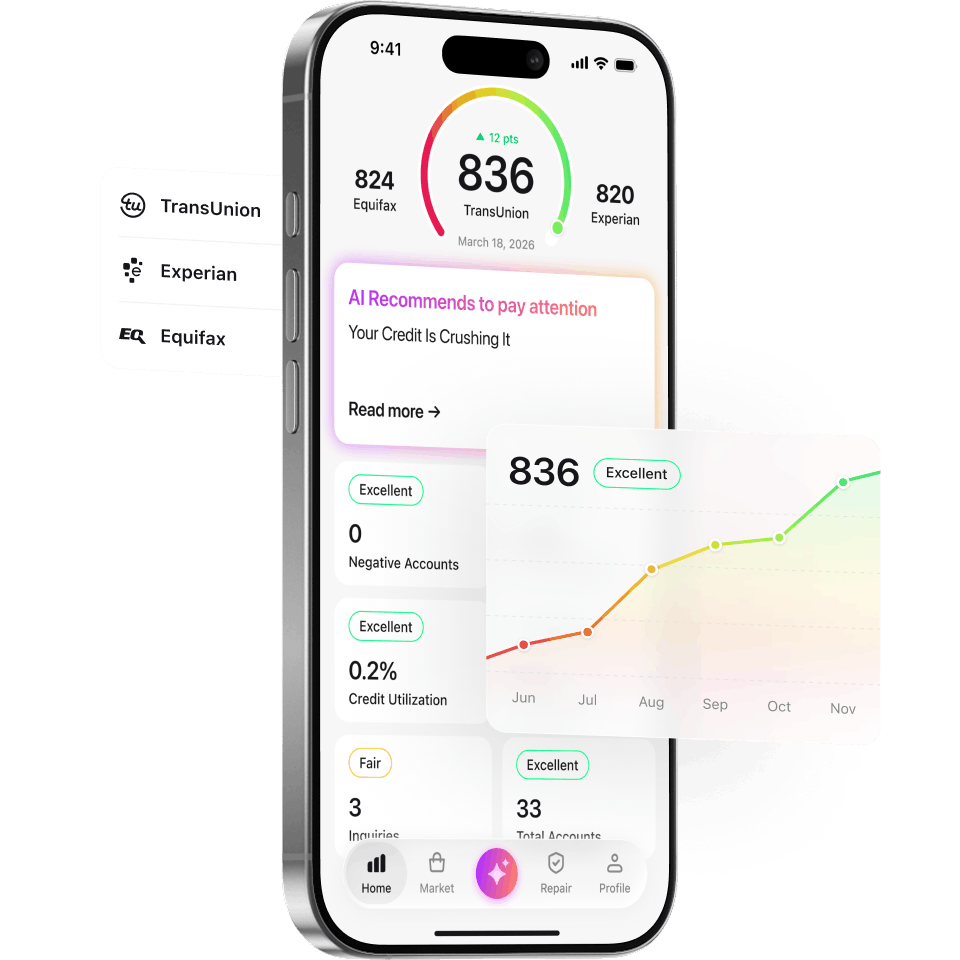
Monitor your accounts. Use Credit Booster AI to track all your accounts, their ages, and their status. Getting surprised by an issuer closing an inactive account is preventable.
Credit Age and Different Scoring Models
Not all scoring models treat credit age the same way.
FICO 8 (most commonly used): Weights credit age at 15% of total score. Considers average age, oldest account age, and newest account age. Closed accounts in good standing remain on your report for 10 years and continue to age during that time.
FICO 10 and FICO 10T: Similar treatment to FICO 8. The “T” version incorporates trended data (your balances over time), but credit age weighting is comparable.
VantageScore 3.0 and 4.0: Considers credit age “less influential” (their language), ranking it below payment history, utilization, and total balances. But it still matters, especially for thin files.
The good news: regardless of the model, older accounts help and newer accounts are neutral to slightly negative. The strategy is the same across all scoring models.
Real Scenarios: How Credit Age Plays Out
Scenario 1: The College Grad. Sarah, 24, has one credit card opened at 18 (6 years old) and a student loan from 4 years ago. Average age: 5 years. She opens two new credit cards for rewards. New average age: 2.8 years. Her score drops 15-20 points just from the age change.
Scenario 2: The Rebuilder. Marcus had financial trouble 5 years ago and closed everything. He started fresh 2 years ago with a secured card and a credit builder loan. Average age: 2 years. He’s doing everything right, but time is the missing ingredient. In 3 more years, his average will hit 5 years, and his score will reflect the improvement.
Scenario 3: The Simplifier. Lisa, 45, has 8 credit cards, some over 20 years old. She decides to close 4 “unnecessary” cards. Her average age drops from 14 years to 11 years, her utilization jumps from 15% to 28%, and she loses the benefit of a higher account count. Her score drops 30-40 points across all three bureaus.
Building Credit Age When You’re Starting Over
If you’ve had a bankruptcy or need to rebuild from scratch, here’s the timeline:
Months 1-6: Open a secured card and/or credit builder loan. These become the foundation of your new credit age.
Months 6-12: Consider one more account (another card or a small installment loan). Your average is still under a year, but you’re building the base.
Years 1-2: Resist the urge to open more accounts. Let what you have age. Focus on perfect payments and low utilization.
Years 2-5: Your accounts are aging nicely. You can start opening strategic accounts (a rewards card, for example) without significantly damaging your average.
Years 5+: You’ve built a solid foundation. New accounts have minimal impact on your overall average.
For more on rebuilding, check our guide on rebuilding credit after collections.
The Bottom Line
Credit age is a marathon, not a sprint. Keep old accounts open, be strategic about opening new ones, and use authorized user status to jumpstart your history if needed. Every year that passes with accounts in good standing strengthens your credit profile.
Start monitoring your credit age today with Credit Booster AI. For broader credit education, visit CreditBooster.com or join the community at JoinCreditClub.com.
Explore more credit strategies in our learning center.
Loving This Info? You'll Love Our App.
Everything you just read, plus AI-powered tools to understand and master your credit. Free to start.
Get the AppFrequently Asked Questions
How is average age of credit calculated?
Average age of credit is calculated by adding up the age of every open account on your credit report and dividing by the total number of accounts. For example, if you have three accounts aged 10 years, 5 years, and 1 year, your average age is 5.3 years.
Does closing an old credit card hurt your score?
Yes. Closing an old card removes it from your average age calculation, lowers your total available credit (increasing utilization), and eventually removes positive payment history. Keep old cards open even if you rarely use them.
What is a good average age of credit?
Seven years or more is considered excellent for FICO scoring. Four to six years is good. Two to three years is fair. Under two years is thin and will limit your score. The longer your accounts have been open, the better.