Credit Repair vs Credit Counseling: Which Wins?
Credit repair and credit counseling solve different problems, so the “winner” depends on what’s actually dragging down your finances. If your issue is bad credit reports, credit repair is the better fit; if your issue is too much debt, credit counseling usually wins. [1][2][8]
The biggest mistake people make is treating them like the same service. They’re not. Credit repair focuses on fixing your credit reports, while credit counseling focuses on fixing your debt, budget, and money habits. [1][2][3][4]
The Difference Between Credit Repair and Credit Counseling
Here’s the simplest way to think about the difference between credit repair and credit counseling: one attacks reporting problems, the other attacks repayment problems. [1][2][3][4]
- Credit repair tries to remove inaccurate, outdated, or unverifiable negative items from your credit reports, such as errors, mixed files, or identity theft damage. It cannot legally remove accurate negative information just because you want it gone. [1][2][3]
- Credit counseling helps you manage debt through budgeting, education, and sometimes a Debt Management Plan, or DMP. Counselors look at your full financial picture and help you build a workable repayment strategy. [2][4][5][6]
That difference matters because the right tool for the wrong problem is just a waste of money.
Feature Comparison: Credit Repair vs Credit Counseling
| Feature | Credit Repair | Credit Counseling |
|---|---|---|
| Main goal | Remove inaccurate or unverifiable negative items from credit reports | Help you manage debt and improve money habits |
| Best for | Errors, identity theft, reporting issues | Overwhelming debt, missed payments, budgeting problems |
| Typical provider | For-profit company or DIY | Usually nonprofit organization |
| Core method | Disputes and validation requests | Budgeting, education, and DMPs |
| Can remove accurate negatives? | No | No |
| Can help lower interest rates? | No | Sometimes, through a DMP |
| Can improve credit over time? | Yes, if errors are removed | Yes, through better repayment behavior |
| Free option available? | Yes, DIY disputes are free | Yes, many nonprofits offer free initial counseling |
That table tells you almost everything you need to know. Credit repair is about the report. Credit counseling is about the debt. [1][2][3][4]
How Credit Repair Works
Credit repair is the process of disputing negative items on your credit reports that are inaccurate, outdated, or cannot be verified. The goal is to get credit bureaus to correct or remove information that should not be there. [1][2][3]
A legitimate credit repair process may include:
- Pulling your credit reports
- Reviewing each negative item line by line
- Filing disputes with the credit bureaus
- Requesting debt validation from collectors
- Following up when investigations come back incomplete [2][3]
The legal backbone here is the Fair Credit Reporting Act, which gives you the right to dispute inaccurate or incomplete information and generally requires investigations to be completed within 30 days. [1][3]
Here’s the catch: credit repair cannot make accurate late payments, collections, or charge-offs disappear just because they hurt your score. If the item is real, it usually stays until it ages off the report. [1][2][3]
How Credit Counseling Works
Credit counseling is built for people who need help getting their debt under control. A counselor reviews your income, expenses, and debts, then helps you build a budget and repayment plan. [2][4][5][6]
Many nonprofit agencies also offer a Debt Management Plan. In a DMP, you make one monthly payment to the counseling agency, and the agency pays your creditors. Some agencies can negotiate lower interest rates and fees, which can make the payoff path much more manageable. [2][4][6]
Most DMPs take about 3 to 5 years to complete. That’s not instant gratification, but it’s real progress if you’re buried under credit card balances. [4][6]
Pricing Comparison
Money is where the gap gets big fast.
Credit Counseling Pricing
Nonprofit credit counseling often starts with a free initial session. If you enroll in a DMP, average fees are modest compared with credit repair services, with typical figures around a $52 enrollment fee and a $34 monthly fee. [2]
That doesn’t mean counseling is always free, but it usually stays affordable. And because these agencies are typically nonprofits, the structure is more consumer-friendly than the for-profit credit repair market. [2][3][5][8]
Credit Repair Pricing
Credit repair companies usually charge much more. Common pricing includes:
- $75 to $150 per month
- $50 to $200 setup fees
- Sometimes even “per deletion” pricing, which can create bad incentives [2]
That monthly subscription can drag on for a long time, especially if the company keeps you enrolled without giving you a clear end date. CFPB has also warned that credit repair companies often charge for things consumers can do themselves for free. [2][3]
So if you’re asking which is cheaper, credit counseling wins easily.
Pros and Cons of Credit Repair
Pros
- Can help clean up credit reports if items are wrong or unverifiable [1][2][3]
- Can be useful after identity theft or mixed-file errors [1][2]
- May improve scores if damaging inaccuracies are removed [1][2]
Cons
- Cannot remove accurate negative items [1][2][3]
- Often expensive compared with DIY options [2][3]
- Many services do work you can do yourself for free [3]
- Industry has a history of misleading guarantees and aggressive marketing [3]
Pros and Cons of Credit Counseling
Pros
- Usually low-cost or free at the initial stage [2][3][6]
- Helps with budgeting, spending control, and long-term financial habits [2][5][6]
- Can reduce interest rates and fees through a DMP [2][4][6]
- Designed to repay debt in full rather than settle for less [4][6]
Cons
- Does not erase debt [2][4]
- A DMP may require closing credit cards, which can temporarily hurt scores [6]
- Results take time, often 3 to 5 years [4][6]
- Not every agency is equally strong, so you still need to vet providers carefully [6]
Is Credit Counseling Better Than Credit Repair?
For debt-heavy situations, yes, credit counseling is usually better. If you’re behind on payments, living on minimums, or juggling multiple balances, counseling addresses the real problem instead of just polishing the report. [2][4][5][6][9]
But if your debt is under control and your credit is being dragged down by reporting errors, then credit repair is the more direct fix. That’s why the real answer isn’t “which is better?” It’s “which problem are you actually trying to solve?” [1][2][3][4]
Credit Repair Company vs DIY: Which Makes More Sense?
This is where a lot of people overpay.
DIY Credit Repair
DIY credit repair means you pull your own reports, spot errors, and dispute them yourself. It’s free except for your time, and the law gives you the right to do it. [1][2][3]
Credit Repair Company
A credit repair company can handle the repetitive work for you, which is convenient. But it doesn’t have magic powers. It can’t force removal of accurate items, and it can’t do anything you couldn’t do yourself if you were willing to put in the work. [1][2][3] If you decide to hire one, our roundup of the best credit repair companies of 2026 compares the legitimate options on price and results.
Which is better?
For most people, DIY credit repair is the smarter move. Save the monthly fee unless you’re dealing with a complicated case like identity theft, mixed files, or a situation where you genuinely won’t follow through on your own. [2][3]
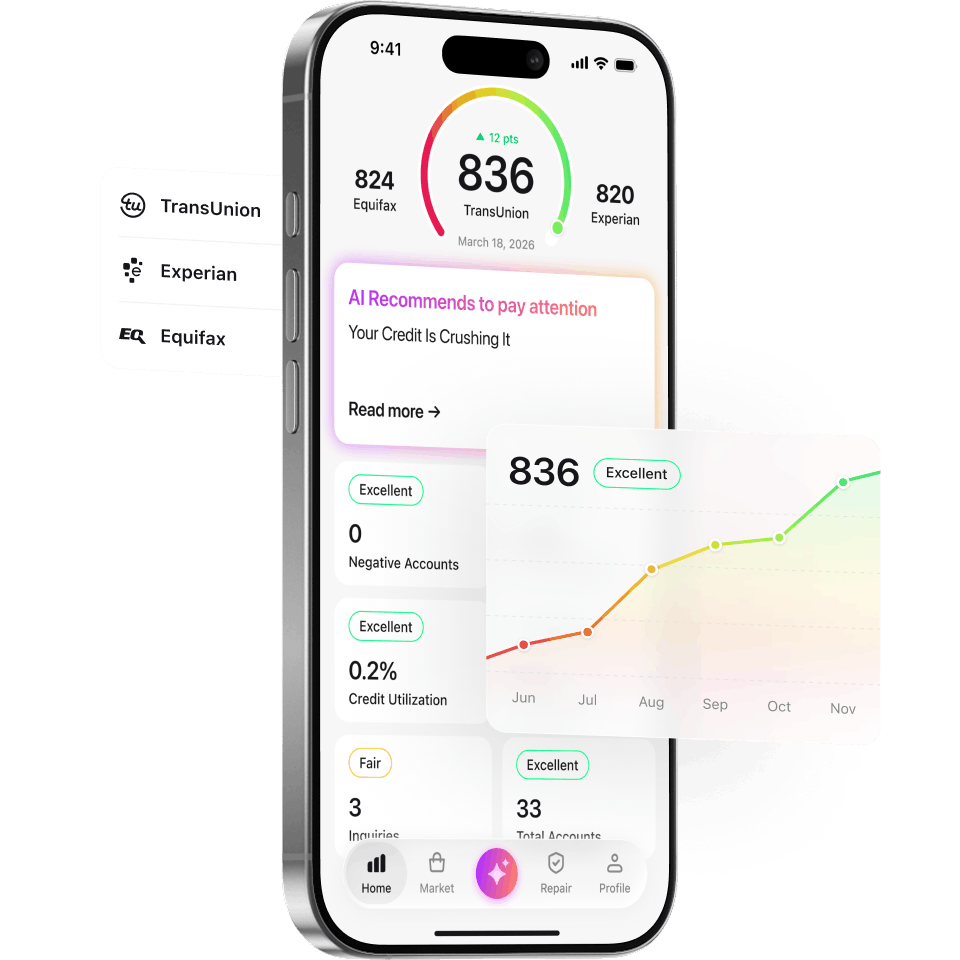
This is also where Credit Booster AI fits nicely. It helps you analyze your credit reports, spot likely errors, generate dispute letters, and track progress without turning credit improvement into an expensive subscription trap.
Download Credit Booster AI, free on iOS and Android.
Why Credit Booster AI Wins for Most People
If you want the most value for the least money, Credit Booster AI has the edge because it gives you the practical parts of credit repair without the bloated cost of a traditional credit repair company. It helps you identify what to dispute, organize your next steps, and stay consistent, which is usually the part people struggle with most.
That’s the sweet spot here. Credit counseling is still the better choice for debt management, but if your goal is improving your credit report, Credit Booster AI is a stronger option than paying a company $75 to $150 a month for tasks you can often do yourself. [2][3]
It’s not a magic wand. Nothing is. But it is a smarter workflow.
Which One Should You Choose?
Use this simple rule:
- If you’re buried in debt, choose credit counseling.
- If your credit report has errors or unverifiable negatives, choose credit repair.
- If you want to avoid wasting money, start with DIY credit repair and a free nonprofit counseling session before paying anyone. [2][3][4][6]
A smart credit plan can also combine both. For example, you might use credit counseling to stabilize your debt and then use credit repair to clean up reporting errors after you’re back on solid ground. That’s not contradictory. It’s strategic.
Related Resources
- is credit repair worth the cost?
- DIY credit repair step-by-step guide
- how credit counseling affects your credit score
Frequently Asked Questions
What is the main difference between credit repair and credit counseling?
Credit repair focuses on disputing inaccurate or unverifiable items on your credit reports, while credit counseling focuses on budgeting, debt repayment, and financial education. They solve different problems. [1][2][3][4]
Is credit counseling better than credit repair?
If your main issue is too much debt, yes, credit counseling is usually the better choice. If your main issue is reporting errors, credit repair is more useful. [2][4][5][6]
Can credit repair remove accurate negative items?
No. Accurate late payments, collections, and charge-offs generally can’t be removed just because they hurt your score. They can only come off if they’re inaccurate, outdated, or unverifiable. [1][2][3]
How much does credit counseling cost?
Many nonprofit credit counseling agencies offer free initial counseling. If you enroll in a DMP, common fees are around a $52 enrollment fee and a $34 monthly fee. [2]
Is a credit repair company better than DIY credit repair?
Usually no. DIY credit repair is free and gives you the same legal dispute rights, while credit repair companies often charge monthly fees for work you can do yourself. [2][3]
Can Credit Booster AI replace a credit repair company?
For many people, yes. Credit Booster AI can help you analyze reports, identify possible errors, generate dispute letters, and track progress, which covers the core tasks most credit repair companies perform. Need professional help? CreditBooster.com has been helping clients rebuild their credit since 2009.
Monitor your credit score and protect your identity with Credit Club.
Loving This Info? You'll Love Our App.
Everything you just read, plus AI-powered tools to understand and master your credit. Free to start.
Get the AppFrequently Asked Questions
What is the main difference between credit repair and credit counseling?
Credit repair focuses on disputing inaccurate or unverifiable items on your credit reports, while credit counseling focuses on budgeting, debt repayment, and financial education. They solve different problems.
Is credit counseling better than credit repair?
If your main issue is too much debt, yes, credit counseling is usually the better choice. If your main issue is reporting errors, credit repair is more useful.
Can credit repair remove accurate negative items?
No. Accurate late payments, collections, and charge-offs generally can’t be removed just because they hurt your score. They can only come off if they’re inaccurate, outdated, or unverifiable.
How much does credit counseling cost?
Many nonprofit credit counseling agencies offer free initial counseling. If you enroll in a DMP, common fees are around a $52 enrollment fee and a $34 monthly fee.
Is a credit repair company better than DIY credit repair?
Usually no. DIY credit repair is free and gives you the same legal dispute rights, while credit repair companies often charge monthly fees for work you can do yourself.
Can Credit Booster AI replace a credit repair company?
For many people, yes. Credit Booster AI can help you analyze reports, identify possible errors, generate dispute letters, and track progress, which covers the core tasks most credit repair companies perform.