CareCredit Requirements 2026: The Credit Score Needed to Get Approved
You typically need a credit score of about 620 or higher to get approved for CareCredit in 2026. CareCredit does not publish a hard cutoff, and applicants in the high 500s are approved regularly when income is steady and existing debt is low, so treat 620 as the practical carecredit credit score benchmark rather than an official minimum. CareCredit is a health and wellness financing card issued by Synchrony Bank, a lender known for working with challenged credit, which is why the carecredit requirements sit lower than a typical rewards Visa. This guide lays out the realistic carecredit approval odds by score band, explains which bureau Synchrony tends to pull, walks through how to get approved step by step, and shows what to do if you are denied.
Before you apply anywhere, it is worth knowing exactly what a lender will see. Our guide to AI credit repair tools covers the apps that pull all three bureau reports and flag the errors dragging a score down.
What Credit Score Do You Need for CareCredit?
There is no single official number. Synchrony underwrites CareCredit using your full profile, your credit score plus income, current debt load, debt-to-income ratio, and payment history. That said, your score still carries the most weight in the decision.
Based on applicant-reported data and industry estimates for 2026, most CareCredit approvals cluster in the low-to-mid 600s. The card is positioned for everyday medical and wellness spending, so Synchrony approves many fair-credit applicants that a premium travel card would reject. A score in the 580 to 619 range is far from an automatic denial, especially with verifiable income and a low balance on your existing cards.
A useful benchmark: if you are wondering whether your number is workable, read our breakdown of whether a 600 credit score is good enough. At 600, you are right inside the zone where CareCredit approvals become common, often with a modest starting limit that grows over time.
CareCredit Approval Odds by Credit Score Band
The table below shows realistic CareCredit approval odds in 2026. These are estimates drawn from applicant reports and Synchrony’s general underwriting patterns, not published guarantees, so treat them as a planning guide rather than a promise.
| Credit Score Band | CareCredit Approval Odds | Likely Starting Limit | What Helps Most |
|---|---|---|---|
| 720 and up | Very high | Higher, often 5,000 dollars or more | Already strong, just prequalify |
| 680 to 719 | High | Solid, often 2,500 to 6,000 dollars | Keep utilization low |
| 640 to 679 | Good | Moderate, often 1,000 to 3,500 dollars | Low debt, steady income |
| 620 to 639 | Moderate | Lower, often 500 to 2,000 dollars | Clean recent payment history |
| 580 to 619 | Possible | Starter, often 300 to 1,200 dollars | Verifiable income, low balances |
| Below 580 | Lower | Limited if approved | Pay down cards, fix report errors first |
Two things move you up a band fast. The first is utilization: getting your revolving card balances under 30 percent of their limits before you apply can lift your score and your odds at the same time. The second is income relative to debt, since Synchrony wants confidence you can repay what you charge.
Which Credit Bureau Does CareCredit Pull?
Synchrony, the bank behind CareCredit, commonly pulls Equifax or TransUnion for card decisions, and which one it reaches for tends to follow a regional pattern, with Experian sometimes used as well. Synchrony does not publish or guarantee which bureau it will check, and the pattern can shift, so do not assume only one report matters.
Because you cannot reliably predict which bureau Synchrony will use on your application, the only safe strategy is to make sure all three of your reports are clean and accurate before you apply. A single outdated late payment or a collection that should have aged off on the report they happen to pull can drop you a full band. If you want to understand how the three agencies differ and why an error on one can cost you, our guide to how the credit bureaus work explains it in plain terms.
Soft Inquiry vs Hard Inquiry: How CareCredit Checks Your Credit
CareCredit offers a prequalification tool on its website, and prequalifying is a soft inquiry that does not affect your credit score at all. It returns an estimate of your approval odds in seconds.
A full CareCredit application is different. Submitting it triggers a hard inquiry, which can cause a small, temporary dip of a few points that typically recovers within a few months. The difference between the two is one of the most misunderstood points in all of credit, so if you are unsure, read our explainer on the difference between a hard and soft credit pull. The takeaway is simple: always run the soft-pull prequalification first, then only submit the hard-pull application once you know your odds are strong.
CareCredit Requirements: The Full Checklist
Beyond your score, the carecredit requirements come down to a short list of basics. Have these ready before you apply.
- Age and residency. You must be at least 18 years old and a United States resident with a valid Social Security number or ITIN.
- Verifiable income. There is no fixed minimum dollar figure, but you must report enough income to repay the requested credit. Pay stubs or recent bank deposits support the number you enter.
- A manageable debt-to-income ratio. Lower existing debt improves your odds. If most of your monthly income already goes to debt payments, expect a smaller limit or a tougher decision.
- A credit profile Synchrony can read. A thin file is not an automatic no, since Synchrony uses scoring models that consider limited history, but a clean recent payment record helps a lot.
- Accurate contact and identity details. Mismatched address or name information can stall or sink an application, so confirm your details match your credit file.
Synchrony complies with the Equal Credit Opportunity Act, so it cannot deny you based on protected characteristics, and the Fair Credit Reporting Act requires it to tell you why if you are turned down. Keep any adverse action notice you receive, because it names the exact bureau and reasons used, which tells you precisely what to fix.
How to Get Approved for CareCredit: Step by Step
Do not guess and hope. Follow this plan to maximize your CareCredit approval odds without unnecessary risk to your score.
-
Pull your credit from all three bureaus. Use a free service and review Equifax, Experian, and TransUnion, since you cannot be certain which one Synchrony will pull. Note your score and scan for errors.
-
Clean up your reports first. Dispute anything inaccurate, an old collection, a late payment that never happened, a balance that is already paid. Fixing one wrong item on the report Synchrony pulls is the single highest-leverage move you can make before applying.
-
Lower your utilization. Pay revolving card balances down to under 30 percent of their limits, and ideally under 10 percent. This can lift your score within one or two statement cycles and directly improves your odds. Our credit utilization guide shows exactly how the ratio is calculated and how to time payments so the lower balance reports.
-
Prequalify on the CareCredit site. Use the prequalification tool, which is a soft pull with no score impact. It estimates your odds and, in many cases, your likely limit in seconds.
-
Submit the full application once your odds look strong. Enter accurate income and identity details. The hard inquiry costs only a few points temporarily, and an approval reports as a new tradeline that can help your credit mix over time.
-
Use it responsibly from day one. Keep your balance well below the limit and pay on time. On-time payments on a Synchrony account build positive history and can raise your limit on future reviews.
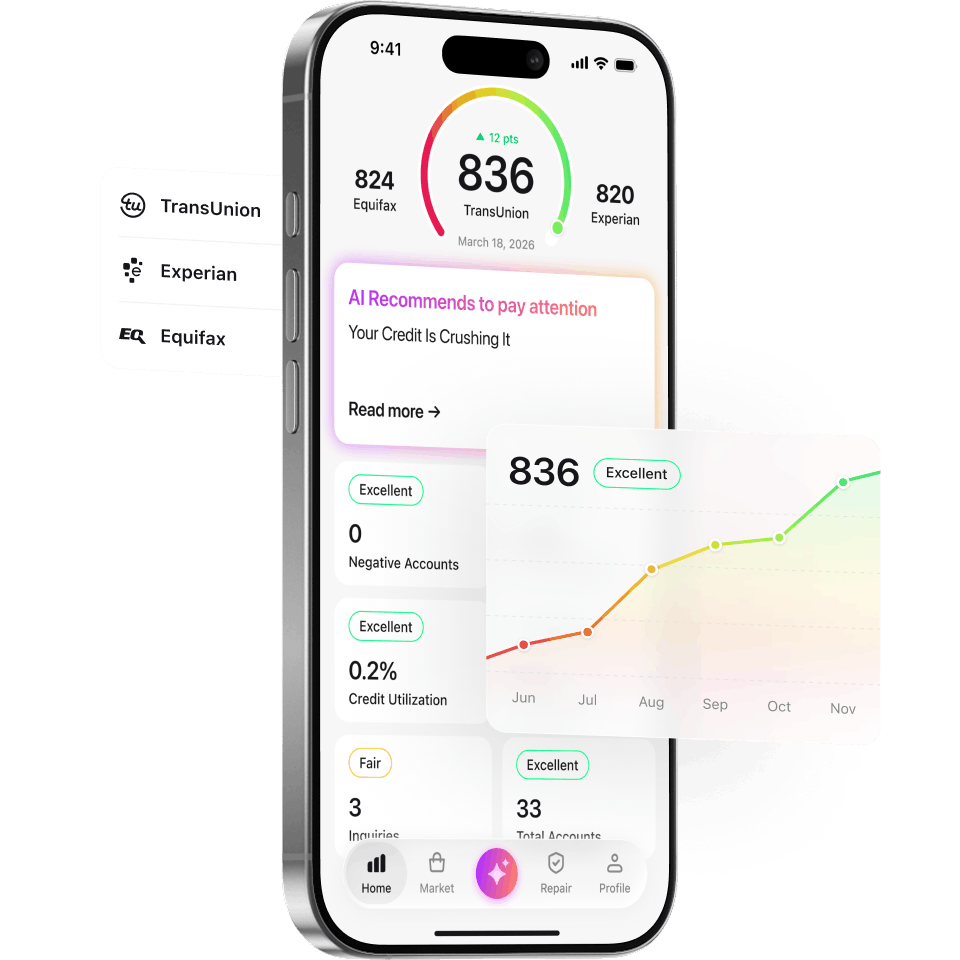
Tired of doing this by hand? Download Credit Booster AI, free on iOS and Android. It scans all three of your reports, flags the errors that quietly drop you a band, generates dispute letters, and tracks your score as it climbs toward the range CareCredit wants.
What to Do If CareCredit Denies Your Application
A denial is not the end of the road, and it is rarely permanent. Here is the recovery sequence.
- Read the adverse action notice. Synchrony must send it generally within about 30 days of a completed application under federal law. It lists the bureau and the specific reasons for the denial, which usually come down to high utilization, recent late payments, too many recent inquiries, or limited credit history.
- Fix the top reason first. If utilization is the culprit, pay balances down. If a late payment is dragging you, a goodwill request or a focused dispute can help, and our guide on what to do after a card denial walks through the exact steps in order.
- Wait three to six months before reapplying. Applying repeatedly stacks hard inquiries and signals risk. Give your fixes time to report, then prequalify again before you submit anything.
- Consider a rebuilding step in the meantime. If your score is well below the mid-500s, a starter or secured card used responsibly can lift you into CareCredit range. Our guide on how to get a credit card with bad credit covers the options that actually report to the bureaus.
Tips to Improve Your CareCredit Approval Odds
Small moves in the weeks before you apply can change the answer from no to yes.
- Time your application after your statement closes. Pay your cards down, let the lower balance report, then apply. Synchrony sees the lower utilization, which can be worth a band.
- Do not open other new accounts right before applying. Each recent inquiry and new tradeline can make you look riskier in the short term.
- Report all reliable income. Synchrony considers household income you have reasonable access to, not just your salary. Underreporting can shrink your limit or trigger a denial.
- Keep older accounts open. Length of credit history matters, and closing an old card can shorten your average account age right when you want it longest.
- Prequalify, do not gamble. The soft-pull prequalification is free and risk-free. Treat a strong prequalification result as your green light and a weak one as a signal to fix more first.
CareCredit sits at the accessible end of the Synchrony lineup, which is exactly why a focused month of cleanup so often flips the decision. If you want the broader picture on how this issuer underwrites its other products, our overview of Synchrony credit score requirements covers store cards, the Premier Mastercard, and home financing alongside CareCredit.
The Bottom Line on CareCredit Requirements
There is no official CareCredit minimum credit score. In practice, a score around 620 or higher generally earns a clean approval, the high 500s can work with steady income and low debt, and below the mid-500s your best move is to rebuild for a month or two first. Synchrony commonly pulls Equifax or TransUnion depending on your region and can use any of the three bureaus, so keep all of them accurate. Prequalify with the soft-pull tool before you ever submit a hard application, fix utilization and report errors first, and treat the card like the real revolving account it is. Do that, and the carecredit approval you want becomes far more than a hope.
Related reading: Financing a specific bill? See the score you need for dental financing, pet financing, and HVAC financing.
Monitor your credit score and protect your identity with Credit Club, our credit monitoring and identity protection membership.
Need professional help? CreditBooster.com has been helping clients rebuild their credit since 2009.
Loving This Info? You'll Love Our App.
Everything you just read, plus AI-powered tools to understand and master your credit. 7 day free trial.
Get the AppFrequently Asked Questions
What credit score do you need for CareCredit?
CareCredit does not publish an official minimum, but applicant-reported data and industry estimates point to a typical score around 620 or higher for a smooth approval. Approvals in the high 500s happen regularly when income is steady and existing debt is low. The card is issued by Synchrony Bank, which is known for working with challenged credit, so a fair score often clears.
What is the minimum credit score for CareCredit?
There is no published CareCredit minimum credit score. Most approvals cluster in the low-to-mid 600s, and many applicants in the 580 to 619 range still get approved with a lower starting limit. Synchrony weighs income, debt, and payment history alongside your score, so a strong overall profile can offset a lower number.
Which credit bureau does CareCredit pull?
Synchrony, the issuer of CareCredit, commonly pulls Equifax or TransUnion, and which one tends to depend on your region and profile. Experian is sometimes used as well. Synchrony does not publish or guarantee which bureau it will check, and it can vary, so the safest move is to make sure all three of your reports are accurate before you apply.
Does prequalifying for CareCredit hurt my credit score?
No. CareCredit offers a prequalification tool that runs a soft inquiry, which does not affect your score. Only when you submit a full application does Synchrony run a hard inquiry, which can cause a small temporary dip of a few points. Always prequalify first to gauge your CareCredit approval odds.
Can I get CareCredit approval with bad credit?
It is possible. Synchrony approves some applicants in the high 500s, especially with steady income and low debt. If your score is below the mid-500s, paying down card balances and disputing report errors first will meaningfully raise your odds. Prequalifying lets you test your chances with no risk to your score.
What income do you need to qualify for CareCredit?
CareCredit has no fixed income requirement, but you must report enough income to cover the requested credit responsibly. Synchrony looks at your debt-to-income ratio, so lower existing debt and verifiable income both help. Applicants with very thin files often pair income proof with a clean payment history to get approved.
What can I use CareCredit for?
CareCredit is a health and wellness financing card accepted at more than 285,000 provider and retailer locations, including dentists, vision and LASIK, dermatology, veterinary care, hearing, and many pharmacies. It is designed for out-of-pocket medical and wellness costs and often comes with promotional financing on larger balances.
What should I do if CareCredit denies my application?
Wait for the adverse action notice Synchrony must send, generally within about 30 days of a completed application under the Equal Credit Opportunity Act. It names the bureau and reasons used. Fix the top issues, usually high utilization or recent late payments, then reapply in three to six months after prequalifying again.
Is CareCredit a real credit card or store financing?
CareCredit is a genuine credit card issued by Synchrony Bank that reports to the credit bureaus. Used responsibly, on-time payments build your credit history. The deferred-interest promotions can be costly if not paid in full by the deadline, so treat it like any revolving account and watch the terms.