The Best Credit Builder Apps in 2026, Ranked and Compared
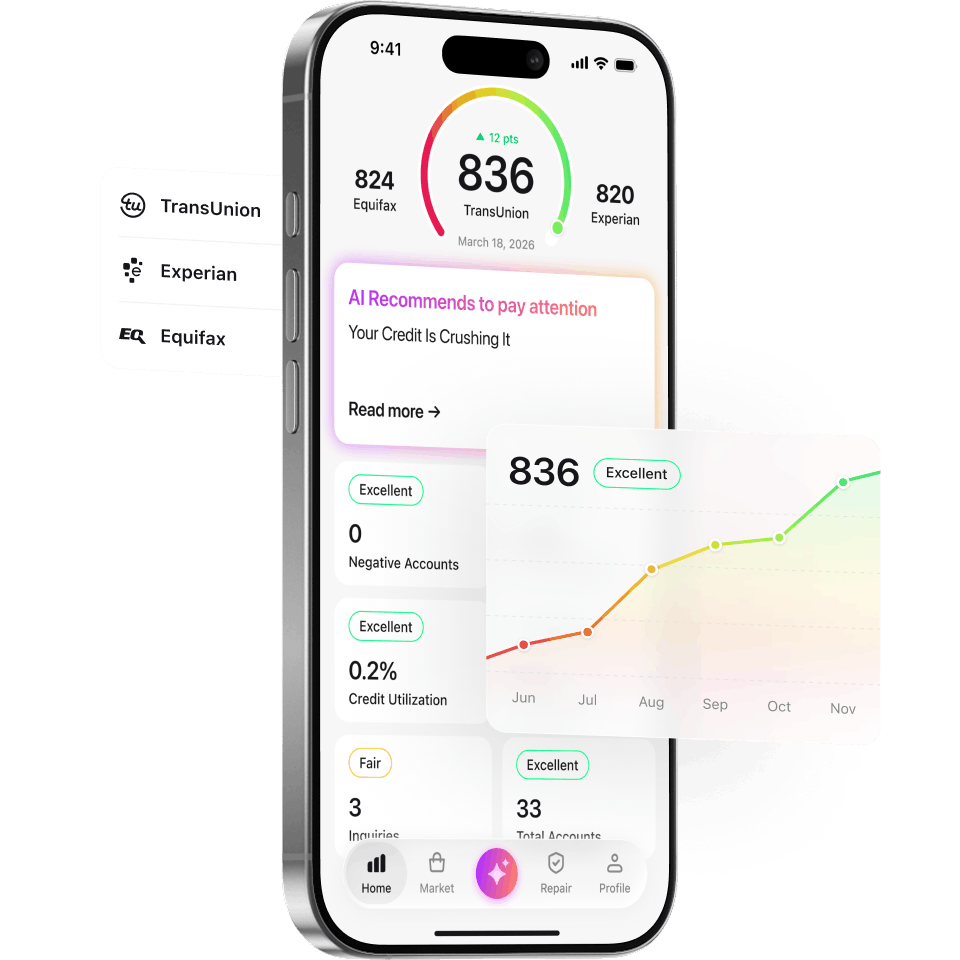
The best credit builder app for most people in 2026 is Credit Booster AI, because it reports your activity to all three bureaus and pairs score building with AI report analysis and dispute guidance in one download. If you specifically want a credit builder loan with no hard inquiry, Self is the strongest pick, and Chime Credit Builder is best if you want a secured card with no annual fee. Credit builder apps help by adding positive payment history to your file over time, which matters because payment history is the single largest factor in most scoring models. What they cannot do is erase accurate negative information, which can legally stay on your report for up to seven years. Below we break the category down by how each app reports, what it costs, and who it fits, so you can install the right one the first time.
Download Credit Booster AI to see where your credit stands before you pick a building method.
Quick verdict: Best overall credit builder app is Credit Booster AI. Best builder loan is Self. Best no-fee secured card is Chime Credit Builder. Best low-cost starter line is Kikoff. Best free rent and bill reporting is Experian Boost.
How Credit Builder Apps Actually Work
Every credit builder app does the same core job in a different wrapper: it creates positive payment history and reports it to the credit bureaus. The mechanism is what varies, and the mechanism decides who each app is for.
- Secured cards. You put down a refundable deposit, get a revolving line, and the account reports like a normal credit card. This builds revolving history and can help your credit mix.
- Credit builder loans. The loan amount sits in a locked savings account while you make fixed monthly payments. At the end you get the money back, minus fees, and you have a paid installment loan on file.
- Small revolving lines. Apps like Kikoff open a low-limit line tied to a store or service, giving you a light way to show on-time revolving activity.
- Rent and bill reporting. Tools like Experian Boost or rent reporters add payments you already make, such as rent, utilities, phone, and some streaming services, to your file.
The feature that matters most is whether the app reports to all three bureaus: Equifax, Experian, and TransUnion. An app that only reports to one leaves gaps, because a lender may pull a bureau the app does not touch. For a deeper look at how monitoring and reporting fit together, see our credit monitoring and protection guide.
Credit Builder App Comparison 2026
Here is the fast side-by-side. Prices and terms change, so confirm the current numbers in each app before you sign up.
| App | Best for | How it builds | Typical cost | Platforms |
|---|---|---|---|---|
| Credit Booster AI | Best overall builder plus dispute tools | AI report analysis, guided disputes, tracking across all three bureaus | Free scan, paid plans around $89 per month | iOS and Android |
| Self | Builder loan with no hard inquiry | Credit builder loan in a locked account | About $25 to $150 per month plus a small setup fee | iOS, Android, web |
| Chime Credit Builder | No-fee secured card | Secured Visa with no annual fee, reports revolving activity | No annual fee, requires a qualifying deposit | iOS and Android |
| Kikoff | Low-cost starter line | Small revolving credit line | Around $5 per month | iOS and Android |
| Experian Boost | Free rent and bill reporting | Adds utility, phone, rent, and some streaming payments | Free | iOS, Android, web |
| Chime + rent reporters | Adding rent you already pay | Reports on-time rent to bureaus | Free to low monthly fee | iOS and Android |
Credit Booster AI leads the list because it does more than one job. It reads your reports, flags items that may be inaccurate, guides disputes under the Fair Credit Reporting Act, and tracks changes across all three bureaus, all in the same app you use to build. The single-purpose tools shine in their lane: Self for an installment track record, Chime for a no-fee revolving card, Kikoff for a cheap starter line, and Experian Boost for adding payments you already make at no cost.
Download Credit Booster AI, free to scan on iOS and Android, and it shows you which building method fits your file.
Best Credit Builder App by Situation
Not everyone needs the same tool. Match your situation to the pick.
- No credit history at all: Self or Chime Credit Builder. Both generally start without a hard inquiry, so you can begin without an existing file.
- Challenged credit and past negatives: Credit Booster AI, because it builds new positive history while giving you dispute tools for items that may be inaccurate.
- Tight budget: Kikoff at roughly $5 per month, or Experian Boost for free.
- You rent and want credit for it: Experian Boost or a dedicated rent reporter, so payments you already make count.
- You want a real credit card in hand: Chime Credit Builder, a secured Visa with no annual fee.
- You want building plus monitoring in one app: Credit Booster AI, which combines the two so you are not juggling apps.
If you are weighing a physical card, our roundup of the best secured credit cards breaks down deposits and fees. If a loan-style tool fits you better, the guide to credit builder loans explains how the locked-savings structure works.
How to Choose the Right Credit Builder App
The best app to build credit is the one that matches how you pay and what you can afford. Run through this checklist before you install anything.
- Confirm it reports to all three bureaus. This is the most important feature. An app that only reports to one bureau builds a partial file.
- Pick your mechanism. A secured card builds revolving history, a builder loan builds installment history, and rent reporting adds payments you already make. If you want both revolving and installment, you can pair two tools.
- Check the real cost. Some apps are free, some charge a few dollars a month, and some hold a refundable deposit. Read whether the deposit comes back and when.
- Watch for hard inquiries. Many builder tools skip the hard credit check. If avoiding an inquiry matters to you, confirm it in writing inside the app.
- Make sure you can pay on time every month. The whole benefit comes from on-time payments. A missed payment can lower a score instead of helping it, so only take on what you can cover.
- Keep utilization low. If you use a secured card, keeping the balance under 30 percent of the limit tends to help. Our credit utilization guide shows why that ratio moves scores.
Once you know your mechanism and budget, the choice usually narrows to one or two apps.
Where Building Ends and Repair Begins
Credit builder apps add positive history. They do not remove accurate negatives, and no honest app will promise that they do. If your report also has items you believe are inaccurate, that is a separate job called disputing, and it is governed by the Fair Credit Reporting Act, which lets you challenge genuinely inaccurate information. Accurate negatives, such as a real late payment or a real collection, generally stay on file for up to seven years no matter which app you use.
This is where a combined tool has an edge. Instead of building with one app and disputing with another, Credit Booster AI does both: it builds positive history while scanning for items that may be inaccurate and guiding the dispute process. For a broader look at the tools in this space, compare notes in our AI credit repair tools compared breakdown and our ranking of the best credit repair apps for 2026.
Credit Booster AI vs the Single-Purpose Apps
Self, Chime, and Kikoff each do one thing well, and that is exactly the point to understand before you pick. Self gives you an installment track record but does not analyze your report or handle disputes. Chime gives you a no-fee secured card but is not a monitoring or dispute tool. Kikoff gives you a cheap revolving line and little else. Experian Boost adds bill payments for free but only touches your Experian file, not all three bureaus.
Credit Booster AI is built for the person who wants building and oversight together. It pulls your reports, flags what looks disputable, guides letters, and tracks results across Equifax, Experian, and TransUnion, so you are not stitching several apps together. If you want to see how it stacks up head to head, read Credit Booster AI vs Credit Karma for the free-monitoring comparison and Credit Booster AI vs Dovly for the AI-versus-AI look.
That said, there is no shame in stacking tools. A common 2026 setup is a no-fee secured card for revolving history, a builder loan for installment history, free bill reporting for extra positive data, and Credit Booster AI on top to watch all three bureaus and handle disputes. The apps do different jobs, and used together they cover more of your file.
The Bottom Line on Credit Builder Apps in 2026
Pick by mechanism first, then by cost. For an all-in-one that builds history and gives you dispute tools, Credit Booster AI is the best overall credit builder app for 2026. For a no-inquiry builder loan, choose Self. For a no-fee secured card, choose Chime Credit Builder. For a cheap starter line, choose Kikoff. For free reporting of rent and bills you already pay, use Experian Boost. Whichever you choose, the rules are the same: make sure it reports to all three bureaus, pay on time every month, keep balances low, and remember that building adds positive history rather than erasing accurate negatives.
Ready to see where you stand and which path fits your file? Download Credit Booster AI today. It is free to scan on iOS and Android.
Frequently Asked Questions
What is the best credit builder app in 2026?
The best credit builder app for most people in 2026 is Credit Booster AI, because it reports activity to all three bureaus and pairs score building with AI report analysis and dispute guidance. Self is the top pick if you want a credit builder loan with no hard inquiry, and Chime Credit Builder is best for a secured card with no annual fee. Every builder app works by adding positive payment history over time, and none can remove accurate negative information.
How do credit builder apps actually work?
Credit builder apps create new positive payment history and report it to Equifax, Experian, and TransUnion. Some do it through a secured card, some through a credit builder loan held in a locked savings account, and some by reporting rent, utilities, or subscriptions. On-time payments are the main thing that helps a score, so the report-to-all-three-bureaus feature matters most.
Do credit builder apps really raise your credit score?
They can help if they report to the bureaus and you pay on time every month, but results vary by person and no app can promise a specific number. Payment history and credit utilization are the two largest scoring factors, so an app that builds on-time history and keeps balances low gives you the best odds. Missing a payment can lower a score instead.
Which credit builder app has no credit check?
Most credit builder tools skip the hard inquiry. Self, Kikoff, and Chime Credit Builder generally do not run a hard credit check to start, which is why they are common picks for people with no credit history or challenged credit. Always confirm the current terms in the app before you sign up, since policies change.
What is the difference between a secured card and a credit builder loan?
A secured card gives you a revolving line backed by a refundable deposit, and it reports like a normal credit card. A credit builder loan holds the loan amount in a locked account while you make monthly payments, then releases the money to you at the end. Both add payment history, but a secured card also builds revolving credit, which can help your credit mix.
Can a credit builder app remove negative items from my report?
No. Credit builder apps add positive history, they do not delete accurate negatives, which can stay on a report for up to seven years. If you also need to challenge inaccurate items, use an app that offers dispute tools alongside building, such as Credit Booster AI, and remember that only genuinely inaccurate items can be removed under the Fair Credit Reporting Act.
How long does it take a credit builder app to work?
Most apps report to the bureaus once a month, so the first new payment usually shows up within one to two billing cycles. Building a meaningful track record generally takes several months of on-time payments, and combining a builder app with credit utilization under 30 percent tends to help faster.
Are credit builder apps worth it in 2026?
For someone with thin or challenged credit, a credit builder app is one of the lower-cost ways to add positive history, and many options cost little or nothing beyond a refundable deposit. The value depends on the app reporting to all three bureaus and on you paying on time every month. If you already have strong credit, the benefit is smaller.
Monitor your credit score and protect your identity with Credit Club, our credit monitoring and identity protection membership.
Need professional help? CreditBooster.com has been helping clients rebuild their credit since 2009.
Loving This Info? You'll Love Our App.
Everything you just read, plus AI-powered tools to understand and master your credit. Free to start.
Get the AppFrequently Asked Questions
What is the best credit builder app in 2026?
The best credit builder app for most people in 2026 is Credit Booster AI, because it reports activity to all three bureaus and pairs score building with AI report analysis and dispute guidance. Self is the top pick if you want a credit builder loan with no hard inquiry, and Chime Credit Builder is best for a secured card with no annual fee. Every builder app works by adding positive payment history over time, and none can remove accurate negative information.
How do credit builder apps actually work?
Credit builder apps create new positive payment history and report it to Equifax, Experian, and TransUnion. Some do it through a secured card, some through a credit builder loan held in a locked savings account, and some by reporting rent, utilities, or subscriptions. On-time payments are the main thing that helps a score, so the report-to-all-three-bureaus feature matters most.
Do credit builder apps really raise your credit score?
They can help if they report to the bureaus and you pay on time every month, but results vary by person and no app can promise a specific number. Payment history and credit utilization are the two largest scoring factors, so an app that builds on-time history and keeps balances low gives you the best odds. Missing a payment can lower a score instead.
Which credit builder app has no credit check?
Most credit builder tools skip the hard inquiry. Self, Kikoff, and Chime Credit Builder generally do not run a hard credit check to start, which is why they are common picks for people with no credit history or challenged credit. Always confirm the current terms in the app before you sign up, since policies change.
What is the difference between a secured card and a credit builder loan?
A secured card gives you a revolving line backed by a refundable deposit, and it reports like a normal credit card. A credit builder loan holds the loan amount in a locked account while you make monthly payments, then releases the money to you at the end. Both add payment history, but a secured card also builds revolving credit, which can help your credit mix.
Can a credit builder app remove negative items from my report?
No. Credit builder apps add positive history, they do not delete accurate negatives, which can stay on a report for up to seven years. If you also need to challenge inaccurate items, use an app that offers dispute tools alongside building, such as Credit Booster AI, and remember that only genuinely inaccurate items can be removed under the Fair Credit Reporting Act.
How long does it take a credit builder app to work?
Most apps report to the bureaus once a month, so the first new payment usually shows up within one to two billing cycles. Building a meaningful track record generally takes several months of on-time payments, and combining a builder app with credit utilization under 30 percent tends to help faster.
Are credit builder apps worth it in 2026?
For someone with thin or challenged credit, a credit builder app is one of the lower-cost ways to add positive history, and many options cost little or nothing beyond a refundable deposit. The value depends on the app reporting to all three bureaus and on you paying on time every month. If you already have strong credit, the benefit is smaller.