Does Closing a Credit Card Hurt Your Score?
Closing a credit card usually hurts your credit score, mainly because it removes that card’s credit limit from your total available credit and can push your utilization ratio higher. The size of the drop depends on your situation and can range from almost nothing to 10, 30, or even 50 points or more if the card carried a large limit and you carry balances elsewhere. This guide explains the two mechanics that drive the damage (utilization and average age of accounts), spells out exactly when closing a card is harmless versus harmful, covers what to do with no-annual-fee cards, and walks you through how to close a card safely if you decide to go through with it.
Why Closing a Credit Card Can Lower Your Score
Two parts of your credit score react to a card closure. Understanding both is the whole game.
The first and biggest is your credit utilization ratio, the share of your available revolving credit that you are actually using. It is one of the heaviest factors in both FICO and VantageScore models, often described as roughly 30 percent of a FICO score. When you close a card, its credit limit disappears from your total available credit, so any balances you carry on other cards suddenly represent a larger percentage of a smaller pool.
The second is your average age of accounts, part of the credit history length factor (often cited as around 15 percent of a FICO score). This one is more gradual and often misunderstood, which we cover below.
If you want the full breakdown of how the utilization piece works, our credit utilization guide explains the ratio in depth and shows the thresholds that matter most.
The Utilization Math: A Simple Example
Utilization is the single reason most people see a score drop after closing a card. Here is the arithmetic that scoring models run.
Say you have three cards:
| Card | Limit | Balance |
|---|---|---|
| Card A | 5,000 dollars | 1,000 dollars |
| Card B | 5,000 dollars | 0 dollars |
| Card C | 5,000 dollars | 0 dollars |
| Total | 15,000 dollars | 1,000 dollars |
Your overall utilization is 1,000 divided by 15,000, which is about 7 percent. That is excellent.
Now you close Card C. Your total available credit drops to 10,000 dollars, but your balance stays at 1,000 dollars. Your utilization is now 1,000 divided by 10,000, or 10 percent. A modest jump.
But close both Card B and Card C, and your available credit falls to 5,000 dollars. That same 1,000 dollar balance is now 20 percent utilization. Same debt, nearly triple the ratio, and a real risk of a score drop.
The takeaway: if you carry any balance at all, closing cards concentrates that balance against less available credit. If every card is paid to zero, this specific effect largely disappears, because zero divided by any number is still zero.
Does Closing a Credit Card Affect Your Average Age of Accounts?
This is where a lot of bad advice lives, so here is the honest version.
A common myth says closing a card instantly shortens your credit history and tanks your average age of accounts. In reality, closed accounts in good standing generally stay on your credit report for about 10 years from the closure date, and they continue to count toward your average age of accounts during that time.
So the average-age hit is usually not immediate. The real risk arrives later, when that closed account eventually ages off your report after roughly a decade. At that point your oldest or longer-standing history can shrink, and your average age of accounts can fall, which may nudge your score down. This is a slow, delayed effect, not an overnight one.
The practical worry is closing your oldest card, or a card that makes up a large share of your history, because when it finally drops off it takes a chunk of your track record with it. If you are curious why a score moved when you did not expect it, our guide on why your credit score dropped covers utilization, aging, and other common triggers.
When Closing a Credit Card Is Fine
Closing a card is not always a mistake. In several situations the downside is small or the benefit outweighs it.
- You have zero balances everywhere. If every card is paid off and stays paid off, the utilization hit is minimal because your ratio does not really move.
- You have plenty of other available credit. If you keep several other cards with healthy limits, losing one limit barely changes your total, so utilization stays low.
- The card is relatively new. Closing a card you opened recently does less damage to your average age of accounts than closing a decade-old account.
- The card charges an annual fee you cannot justify. If a card costs 95 or 550 dollars a year and you no longer use the perks, paying to keep it open purely for score reasons is often not worth it.
- The card is a genuine temptation. If an open line leads you to overspend and carry balances, the interest and debt can hurt your finances far more than a small score dip helps.
- You are separating finances. After a divorce or breakup, closing a joint or authorized-user arrangement can be the responsible move even at a small score cost.
When Closing a Credit Card Is Harmful
Other times, closing a card does real damage. Be cautious if any of these apply.
- You carry balances on other cards. This is the classic trap. Removing a limit spikes your utilization and can cost you meaningful points right when you are already using credit.
- It is your oldest card or your highest-limit card. Both the age and the limit are doing heavy lifting for your score.
- You are about to apply for a mortgage, auto loan, or new card. A utilization jump at the wrong moment can raise your interest rate or cost you an approval. Avoid closing anything in the months before a big application.
- You are actively rebuilding. If your file is thin or recovering, every open account and every dollar of limit helps.
If you are early in your credit-building journey, the smarter move is usually to add positive accounts rather than subtract them. Tools like the best secured credit cards and credit builder loans add history and, in the case of secured cards, available credit that supports your utilization.
What About No-Annual-Fee Cards?
Here is the simplest rule in this entire article: if a card has no annual fee, there is rarely a strong reason to close it.
Leaving a no-fee card open costs you nothing and quietly helps your score in two ways. It keeps its credit limit in your available-credit pool, which holds your utilization down, and it keeps the account alive and aging, which supports your history length.
The one catch is inactivity. Card issuers can close accounts that go unused for a long stretch, often somewhere in the range of 6 to 24 months depending on the issuer, and an issuer-initiated closure affects your utilization the same way a voluntary one does. To keep a no-fee card active without effort:
- Put one small recurring charge on it, such as a streaming subscription.
- Set that charge to autopay in full each month so you never carry a balance or pay interest.
- Log in occasionally to confirm the card is still open and the autopay is working.
This keeps the limit and the history working for you at essentially zero cost and zero risk.
How to Close a Credit Card Safely: Step by Step
If you have weighed the tradeoffs and decided to close a card, doing it in the right order limits the score damage. Follow these steps.
-
Pay down other balances first. Before you close anything, get your utilization as low as you can across all your cards. If your overall utilization is already near zero, closing one card will move it far less. Aim to keep your total utilization in the single digits if possible.
-
Choose which card to close carefully. Keep your oldest card and your highest-limit card open when you can. Close the newer, lower-limit, or fee-charging card instead. Never close your only card.
-
Redeem any rewards. Cash out points, miles, or cash back before you close, since many issuers forfeit unredeemed rewards the moment the account closes.
-
Confirm the balance is zero and autopays are moved. Move any subscriptions or recurring charges to another card, then verify the statement balance is truly zero, including any pending charges or interest.
-
Call the issuer or close online, and ask for a written confirmation. Request that the account be reported to the bureaus as “closed at consumer’s request.” Get an email or letter confirming the closure and the zero balance.
-
Check your credit reports afterward. A month or two later, pull your reports and confirm the account shows closed with a zero balance and no lingering activity. If something looks wrong, dispute it.
-
Watch your score and adjust. If your score dips, focus on paying down remaining balances, which is the fastest lever to recover utilization-driven losses.
If you want a broader recovery plan after a dip, our guide on how to improve your credit score by 100 points lays out the highest-impact moves in order.
Does the Score Model Matter? FICO vs VantageScore
Both major scoring families weigh utilization heavily and both consider account age, so closing a card can affect either one. There are subtle differences in how they treat these factors, and a lender may pull a different model or a different bureau than the free score you watch. That is why the free number in your app can move differently than the score a lender sees. Our FICO vs VantageScore breakdown explains where the two models diverge so a surprise swing makes sense.
The bottom line holds across models: high utilization is bad, losing available credit tends to raise utilization, and a longer account history helps.
Business Cards and Closing Accounts
If the card in question is a business card, the mechanics can differ. Many business credit cards do not report to your personal credit unless you default, so closing one may have little or no effect on your personal score. If you are building a business credit profile, the priorities are different from personal cards, and our guides on how to build business credit fast and the credit score needed for a business loan walk through what actually moves the needle there.
Before closing any business card, confirm whether it reports to the personal bureaus, since the answer changes whether the closure touches your personal utilization at all.
The Honest Bottom Line
Does closing a credit card hurt your score? Most of the time, yes, and the two reasons are almost always utilization first and average age of accounts second. But the damage is not fixed or permanent. If you pay balances down before you close, keep your oldest and highest-limit cards, and never touch a no-fee card without a real reason, you can close a card with little or no lasting harm. And even when a score dips, it typically recovers as you keep utilization low and keep paying on time.
The single best habit is simple: keep no-fee cards open and idle, close only fee-charging or risky cards, and never close anything in the months before a major loan application.
Frequently Asked Questions
Does closing a credit card hurt your credit score?
Usually, yes. Closing a card removes its credit limit from your total available credit, which can push your utilization ratio higher and lower your score, sometimes by 10 to 50 points or more if the card had a large limit. It can also reduce your average age of accounts over time. If you carry no balances anywhere and the card is young, the impact may be small or close to zero.
How much does closing a credit card hurt your score?
It depends entirely on your situation. If you carry balances on other cards, closing a high-limit card can drop your score by 10 to 50 points or more because your utilization jumps. If all your cards are paid to zero and you have plenty of other available credit, the drop can be a few points or none at all. There is no single fixed number.
Is it better to close a credit card or leave it open?
In most cases leaving a no-annual-fee card open is better for your score, because it keeps your total available credit high and your account history alive. Close a card mainly when it charges an annual fee you no longer justify, tempts you to overspend, or came from a divorce or joint account you need to separate.
Does closing a credit card with a zero balance hurt your score?
It can still hurt, even with a zero balance on that card, if you carry balances on other cards. Removing the card’s limit raises your overall utilization ratio. If you carry no balances anywhere, the main long-term effect is a possible small drop from a shorter average account age once the account eventually falls off your report.
How long does a closed credit card stay on your credit report?
A closed account in good standing generally stays on your credit report for about 10 years from the closure date, and it keeps helping your average age of accounts during that time. A closed account with negative history, like late payments, usually stays about 7 years from the first missed payment.
Should I close a credit card I do not use?
Not automatically. If the unused card has no annual fee, leaving it open costs you nothing and helps your utilization and account age. Put a small recurring charge on it and pay it off to keep it active. Consider closing only if it has an annual fee you cannot justify or if the temptation to overspend is a real risk.
Will closing a credit card raise my utilization?
Yes, if you carry balances on any cards. Utilization is your total balances divided by your total credit limits. Closing a card removes its limit from the denominator, so the same balances now use a larger share of your remaining credit, which raises your ratio and can lower your score.
Does canceling a credit card hurt your score more than not using it?
Yes. Simply not using a card keeps its limit and history working for you, so it helps your score. Canceling it removes that limit and, over time, that history, which is why leaving a no-fee card open and idle is usually the better move for your credit.
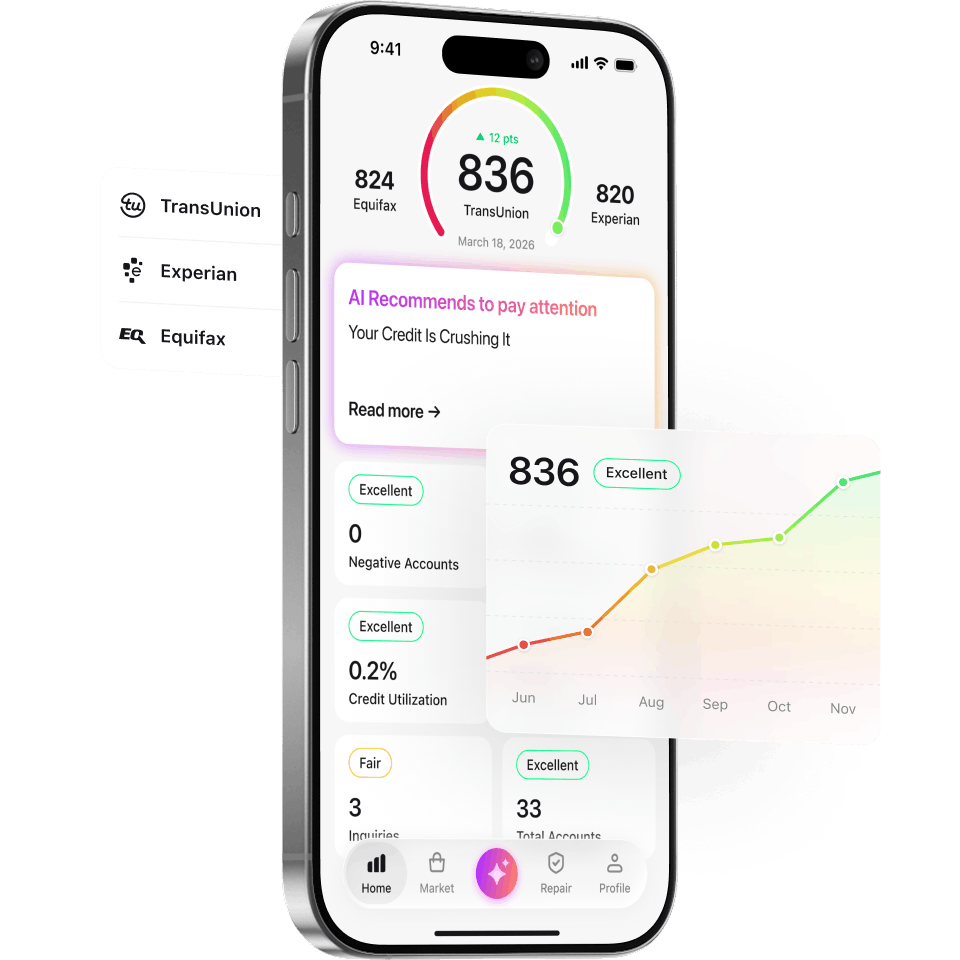
Want to know exactly how a card closure would move your score before you do it? Download Credit Booster AI, free on iOS and Android. It tracks your utilization across every card, flags which accounts are helping your score, and shows you the smartest order to pay down balances so a closure costs you as little as possible.
Monitor your credit score and protect your identity with Credit Club, our credit monitoring and identity protection membership.
Need professional help? CreditBooster.com has been helping clients rebuild their credit since 2009.
Loving This Info? You'll Love Our App.
Everything you just read, plus AI-powered tools to understand and master your credit. Free to start.
Get the AppFrequently Asked Questions
Does closing a credit card hurt your credit score?
Usually, yes. Closing a card removes its credit limit from your total available credit, which can push your utilization ratio higher and lower your score, sometimes by 10 to 50 points or more if the card had a large limit. It can also reduce your average age of accounts over time. If you carry no balances anywhere and the card is young, the impact may be small or close to zero.
How much does closing a credit card hurt your score?
It depends entirely on your situation. If you carry balances on other cards, closing a high-limit card can drop your score by 10 to 50 points or more because your utilization jumps. If all your cards are paid to zero and you have plenty of other available credit, the drop can be a few points or none at all. There is no single fixed number.
Is it better to close a credit card or leave it open?
In most cases leaving a no-annual-fee card open is better for your score, because it keeps your total available credit high and your account history alive. Close a card mainly when it charges an annual fee you no longer justify, tempts you to overspend, or came from a divorce or joint account you need to separate.
Does closing a credit card with a zero balance hurt your score?
It can still hurt, even with a zero balance on that card, if you carry balances on other cards. Removing the card's limit raises your overall utilization ratio. If you carry no balances anywhere, the main long-term effect is a possible small drop from a shorter average account age once the account eventually falls off your report.
How long does a closed credit card stay on your credit report?
A closed account in good standing generally stays on your credit report for about 10 years from the closure date, and it keeps helping your average age of accounts during that time. A closed account with negative history, like late payments, usually stays about 7 years from the first missed payment.
Should I close a credit card I do not use?
Not automatically. If the unused card has no annual fee, leaving it open costs you nothing and helps your utilization and account age. Put a small recurring charge on it and pay it off to keep it active. Consider closing only if it has an annual fee you cannot justify or if the temptation to overspend is a real risk.
Will closing a credit card raise my utilization?
Yes, if you carry balances on any cards. Utilization is your total balances divided by your total credit limits. Closing a card removes its limit from the denominator, so the same balances now use a larger share of your remaining credit, which raises your ratio and can lower your score.
Does canceling a credit card hurt your score more than not using it?
Yes. Simply not using a card keeps its limit and history working for you, so it helps your score. Canceling it removes that limit and, over time, that history, which is why leaving a no-fee card open and idle is usually the better move for your credit.