Here is the honest version, up front. For some people, personal credit that is fixed and then built the right way can open the door to real business capital, sometimes into six figures, at a 0% introductory rate for a set window of time. It is a tool, not a lottery ticket, and it is debt, so used the wrong way it sets you back instead of forward.
One thing before we start. This is education, not financial, legal, or investment advice. I am talking in general terms about how the credit system works, not telling any one person what to do with their money.
Most people think funding a business takes rich parents or a bank that already said no. The lever almost everyone overlooks is sitting right on their own credit report, and it only works if you use it in the right order. Fix first. Build second. Fund last. Skip a step and the whole thing falls apart.
And let me be blunt, because the people selling dreams never are. This is borrowed money with your name on it. Used with a plan, it is one of the cheaper forms of capital a new business can reach. Used without one, it is a fast way to owe money you cannot pay back.
Stage 1: Fix the foundation
You cannot build capital on a broken file. Before anything else, get your credit report clean and accurate.
The right way to dispute is boring, and that is exactly why it works. You find a real, documented error, and you challenge that one specific item with the records to back it. Wrong balance, an account that is not yours, a payment marked late that you paid on time.
What does not work is blasting the bureaus with generic mass disputes or AI-written letters that challenge everything at once. Those get flagged as frivolous and tossed, and you lose credibility for the disputes that were actually valid. Slow and specific beats fast and sloppy every time. If you want the full method, I laid it out in credit dispute mastery.
Now the part the gurus skip. Accurate negative information cannot simply be erased. If a late payment or a collection is real and reported correctly, no letter and no service makes it vanish, and anyone who says otherwise is lying to you. Here is why accurate items stay. Disputes fix errors. They do not rewrite an honest history.
While you clean up the report, drive your credit utilization down. Utilization is one of the fastest-moving parts of a score, and getting it low is often the single biggest lift you can make in the short term.
Stage 2: Build and boost
A clean file is the starting line, not the finish. Stage 2 is about actively building a strong, deep profile, and there are a handful of proven tools for it.
- A credit-builder loan, which reports steady on-time payments while you effectively save.
- A secured credit card that you use lightly and pay in full, then graduate to unsecured.
- Becoming an authorized user on the seasoned, well-paid account of someone you trust.
- Reporting your rent and utilities so payments you already make start counting.
The goal here is to reach a strong tier and hold it. For most people that means aiming for the 740 to 770-plus range, which is generally where the best rates and approvals live. Keep utilization low, pay every bill on time, and let your accounts age. There is no rushing the age of your credit. Time in the game is part of the score.
Stage 3: Turn strong credit into capital
This is the stage everyone wants to jump to, and it only works because you did the first two.
Once personal credit is genuinely strong, generally the low-to-mid 700s and up and always subject to the lender’s approval, borrowers can start qualifying for business credit cards that carry a 0% introductory APR window, often 12 to 21 months. During that window, the balance carries no interest.
Strong-profile borrowers sometimes qualify for and stack several of these cards to reach a larger total. Some reach $100,000 to $200,000 in combined 0% lines. I want to be careful with that number, because it is exactly where hype lives. That is a range some strong profiles reach. It is not a number you are owed, not a number I can promise you, and not something that happens without solid income and a clean profile behind it. Plenty of people qualify for far less, and that is normal.
The point is not the headline figure. The point is that credit you built responsibly can become interest-free capital for a defined period of time, which is a very different thing from maxing out a personal card at full price.
How the cash actually comes out
A credit line is not cash in a checking account, so there is a step most people miss.
To turn a 0% line into money you can actually deploy, borrowers typically use a 0% balance transfer into a bank account, or convenience checks the issuer provides. That usually carries a one-time fee of about 3 to 5 percent of the amount moved.
Run the math on what that really means. You pay roughly 3 to 5 percent one time in exchange for 12 to 21 months of interest-free use of the capital, instead of paying the 20 percent-plus that typical cards charge in a year. For a business that has a clear use for the money and a plan to pay it back inside the window, that trade can make sense. The mechanics of the transfer itself are the same ones I cover in balance transfers and your credit, and the broader 0% game is in the credit moves banks hope you never learn.
The honest risks
Read this section twice. It is the whole difference between a tool and a trap.
- It is a personal guarantee. Most small business cards make you personally on the hook. If the business fails, the debt does not disappear with it. You still owe it.
- The 0% window ends. That interest-free period is temporary. You need a real payoff plan or an exit before it closes, because when the regular rate turns on, cheap capital becomes expensive fast.
- A big draw spikes your utilization. Pulling a large sum can push your utilization up and dent your personal score in the short term. Plan for that, do not get surprised by it.
- One missed payment can void the 0% rate. Slip once and the issuer can end the promo and charge you the full rate, sometimes retroactively. There is no room for sloppiness here.
- This is real debt, not free money. It never becomes free money. It is a lower cost of borrowing for a limited time, and only if you execute.
- Never fund a bad idea, and never live on it. This is capital for a business with a real path to paying it back. It is not income, it is not a cushion to cover your rent, and it is not a bet you make hoping it works out.
Discipline and a plan are not the nice-to-have part of this. They are the entire thing.
The right way vs the trap
The right way looks calm and boring. You spend months fixing errors and building a strong, aged profile. You have a specific business use for the money and a written plan to repay it well inside the 0% window. You pull what you need, deploy it, and treat the payoff date as a hard deadline. The 3 to 5 percent fee is a known, deliberate cost of capital, and you sleep fine.
The trap looks like excitement. Someone rushes to Stage 3 without fixing or building first, gets approved for less than they hoped, and spends it on a business that was never validated. The window closes, the real rate hits, utilization is buried, and now there is a personal guarantee on debt with no revenue behind it. Same tool, opposite outcome. The only variable that changed was the plan.
Where the tool fits
This is where an app earns its place, and I want to be precise about what it does and does not do.
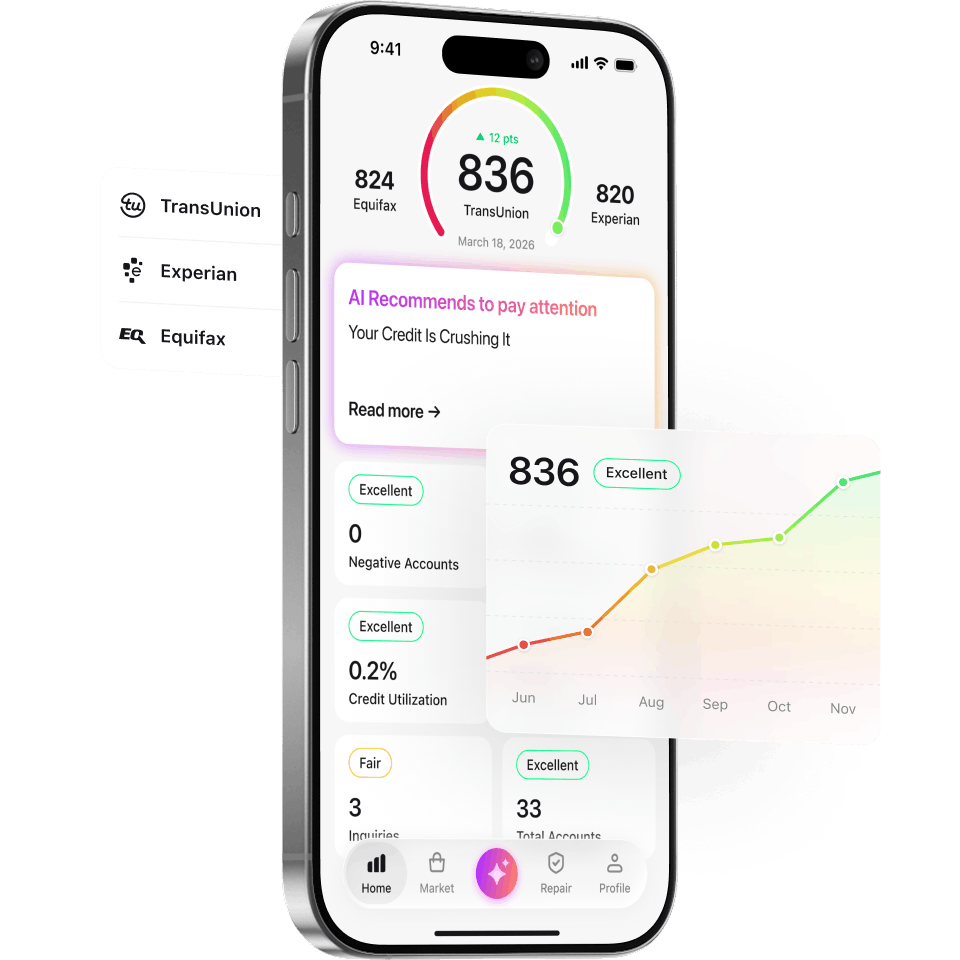
Credit Booster AI is built to get you through Stages 1 and 2 so you actually arrive at Stage 3 fundable. It shows your real scores, tracks your utilization, flags the errors worth disputing, and tells you your next best move so you are not guessing. That is the unglamorous work that decides whether Stage 3 is ever available to you.
What it does not do is hand you the funding or promise you an approval. No honest app can. Lenders decide who they lend to and how much. The tool gets your profile into the shape where those doors are more likely to open. Walking through them is on you, and on the lender.
The point
The credit system quietly rewards the people who understand it and use it in order. There is no secret here, no bank conspiracy, no shortcut. Just three stages done patiently: fix what is wrong, build what is strong, and then, only then, put that strong credit to work.
Do it right and your own credit becomes one of the cheapest tools you have to fund something real. Do it wrong and it becomes a debt with your name on it and nothing to show. The order, the plan, and the discipline are everything. Respect them and this is a lever. Ignore them and it is a hole.
Alexander Katsman is the founder and CEO of Credit Booster AI, an AI credit app that shows you your real scores, tracks your utilization, and tells you your next best move.
Loving This Info? You'll Love Our App.
Everything you just read, plus AI-powered tools to understand and master your credit. Free to start.
Get the AppFrequently Asked Questions
Can I really turn my credit into $100,000 or more in business capital?
Some strong-profile borrowers do reach $100,000 to $200,000 in total 0% intro business lines by qualifying for and stacking several cards, but it is never guaranteed. Every approval is subject to the lender, your income, your existing debt, and your full profile. Treat those numbers as an upper range some people reach, not a promise.
How does 0% intro APR business credit actually work?
Many business credit cards offer an introductory window, often 12 to 21 months, where you pay no interest on the balance. Used with a plan, that gives you interest-free capital for that period. When the window ends, the regular rate kicks in, which is why you need a payoff or exit plan before then.
How do you get usable cash out of a 0% credit line?
Borrowers often move a 0% balance to a bank account or use convenience checks, typically for a one-time fee of about 3 to 5 percent. So you pay roughly 3 to 5 percent once instead of 20 percent-plus in interest, but it is still debt with your name on it and it has to be repaid.
Is this the same as a credit guru funding program?
No. There is no secret and no shortcut. This is just understanding how personal credit, business credit, and 0% intro offers work, done in the right order and with discipline. Anyone promising guaranteed approvals or a fixed dollar amount is selling hype, not reality.
What is the biggest risk of funding a business with credit cards?
The personal guarantee. Most small business cards make you personally responsible, so if the business fails, you still owe the balance. Combine that with the 0% window ending and one missed payment potentially voiding the rate, and it is clear this only works with a real plan behind it.