Why Did My Credit Score Drop After Paying Off a Loan?
Your credit score dropped after paying off a loan because the payoff closed the account, which can thin your credit mix, end that account’s monthly on-time reporting, and in some scoring models shrink the average age of your active accounts. The dip is usually small, commonly somewhere in the range of 5 to 30 points, and it typically fades within a few months as long as the rest of your file stays clean.
If that feels backwards, you are not alone. This is the single most repeated question in credit communities like r/CreditScore: someone finally kills their car loan, student loan, or personal loan, checks their app expecting a reward, and finds a lower number instead. Nothing is broken. You did the financially right thing, and the scoring math will catch up. Here is exactly what happened under the hood, how long it lasts, and what to do next.
The Real Reason: Scoring Models Grade Open Accounts, Not Finished Ones
Credit scores are designed to predict how you will handle debt going forward. An open loan with a perfect payment record is live evidence that you are managing debt right now. The moment you pay it off, the lender closes the account, and that live evidence goes quiet.
Three mechanics drive the drop.
1. Credit Mix: You May Have Lost Your Only Installment Account
Credit mix, the variety of account types you manage, makes up about 10 percent of a FICO score. Models like to see both revolving credit (credit cards) and installment credit (auto loans, student loans, personal loans, mortgages) being handled at the same time.
If the loan you paid off was your only open installment account, your file just went from “manages both types” to “cards only.” That is the most common single cause of the payoff dip, and it is why people with several other open loans often see no drop at all. Our credit mix explained guide covers how much this factor really moves scores at different file thicknesses.
2. The Account Stops Adding Fresh Positive Data
Every month that loan reported “paid on time,” it fed the most important scoring ingredient of all: payment history, roughly 35 percent of a FICO score. The history you built does not vanish, but the account stops generating new on-time data points. Your remaining open accounts have to carry the fresh-activity signal alone.
3. Installment “Utilization” Flips From Great to Gone
This one is counterintuitive. FICO models look at how much of your original installment balance remains. A loan paid down to the last few hundred dollars scores beautifully: nearly 100 percent of the debt retired, account still open and reporting. The day it closes, that favorable data point does not read as “excellent,” it simply stops existing. You lose a small positive rather than gaining one.
Did Paying Off the Loan Hurt My Average Age of Accounts?
Mostly no, and this is the most over-blamed factor on Reddit. The truth depends on the scoring model.
- FICO (used in most lending decisions): Closed accounts in good standing stay on your report for up to 10 years and continue to count toward your average age of accounts and your oldest account the entire time. Paying off a 6-year-old car loan does not remove those 6 years from FICO’s age math today.
- VantageScore (used by many free apps like Credit Karma): Some VantageScore versions weight closed accounts differently or exclude them from parts of the age calculation, so the free-app score you check daily can drop more sharply than your actual FICO.
This explains a classic Reddit pattern: “Credit Karma says I dropped 40 points but my bank’s FICO barely moved.” If your dip showed up in a free monitoring app, check a FICO source before panicking. The score a lender pulls is likely calmer. For a deeper look at why old accounts matter and when closing them hurts, see should I close old credit cards, where the same aging rules apply.
Car Loan vs Student Loan vs Personal Loan: Does the Type Matter?
The mechanics are identical, but the typical file context differs, which changes how hard each payoff tends to sting.
| Loan Paid Off | Why the Drop Can Feel Bigger | Typical Severity |
|---|---|---|
| Car loan | Often the only open installment account on a card-heavy file | Small to moderate, temporary |
| Student loans | Frequently the oldest accounts on a younger file, and often several tradelines close at once | Moderate on thin files, small on thick ones |
| Personal loan | Usually short history, less age and mix weight | Usually smallest |
| Mortgage | Large, long tradeline with heavy mix weight, but payoff usually happens on thick mature files | Small for most, noticeable on files with no other loans |
Two honest caveats. First, nobody outside the scoring companies can promise you an exact point value; the same payoff can move one file 3 points and another 25. Second, if several student loan tradelines close simultaneously (common, since servicers report each disbursement separately), the combined effect lands at once, which is why student loan payoffs generate the most shocked Reddit posts.
How Many Points Will My Score Drop After Paying Off a Loan?
There is no universal number, and any article that promises one is guessing. That said, the pattern reported across credit forums and by the bureaus themselves is consistent:
- Thick file, multiple open loans and cards: often no visible drop, or a dip in the single digits.
- Average file, one other loan or several seasoned cards: commonly a drop somewhere in the 5 to 15 point range.
- Thin file where this was the only installment account: the larger dips, sometimes 20 to 30 points or more, concentrate here.
If you dropped much more than that, the payoff probably was not the whole story. A credit card statement balance reporting high the same week can move a score far more than any loan closure, because utilization is a heavyweight factor. Before blaming the payoff, read our guide to credit utilization and compare this month’s reported card balances to last month’s.
How Long Does the Drop Last?
For most people, a few months. The dip is not a penalty with a timer; it is your file re-equilibrating. As your open accounts keep reporting on-time payments and low balances, the score drifts back. Many people report full recovery within roughly 3 to 6 months, and files that add a new installment account (organically, not desperately) often recover faster.
The paid-off loan keeps helping you the whole time. A loan closed in good standing remains on your report for up to 10 years, feeding your payment history and, on FICO, your account age. You banked that history permanently.
When the drop does not recover, something else is usually going on: rising card balances, a new collection, a missed payment, or an error. If your score keeps sliding instead of rebounding, work through our diagnostic on why your credit score dropped to isolate the real cause.
Should I Not Pay Off My Loan to Protect My Score?
No. This question comes up in nearly every Reddit thread on the topic, and the math is lopsided. Keeping a loan open costs you real interest every month to preserve a temporary handful of points. A credit score is a means to cheaper borrowing, not a trophy; paying interest to inflate it defeats the purpose.
The one legitimate exception is timing. If you are 30 to 60 days from a mortgage application or another major loan, consider waiting until after the lender pulls your credit to make the final payoff. You get the underwriting benefit of the intact score, then pay the loan off the day after closing. Also note that a lower monthly debt load improves your debt-to-income ratio, which mortgage underwriters care about independently of your score, so payoff can help an application even while the score dips slightly.
What to Do After Your Score Drops: Step-by-Step
You cannot reopen a paid-off loan, and you should not want to. Here is the recovery playbook.
-
Verify the account reports correctly. Pull all three reports and confirm the loan shows “closed, paid as agreed” with a zero balance and no late marks. Errors at closure, like a phantom balance or a bogus 30-day late, are common and disputable. If you find one, our walkthrough on how to dispute a credit report step by step shows exactly how to fix it.
-
Identify what actually moved. Compare this month’s report to last month’s. If card balances jumped or a new inquiry appeared, address those first; they usually outweigh the payoff effect.
-
Drop your card utilization. The fastest lever on any file. Get every card’s reported balance under 30 percent of its limit, and under 10 percent if you want maximum effect. Pay before the statement closing date so the low balance is what gets reported.
-
Rebuild your installment mix only if it makes sense. If the payoff left you with zero open installment accounts and you have a long runway before your next big application, a small credit builder loan restores the mix for a few dollars a month in cost. Do not take on a car loan or personal loan you do not need purely for scoring; that is the tail wagging the dog.
-
Keep every open account spotless. Payment history is roughly 35 percent of your score. One 30-day late will cost you multiples of what the payoff dip did, and it lingers for up to 7 years.
-
If your file is thin, add a low-risk revolving anchor. People whose only account was the now-closed loan sometimes discover they barely have a file left. One of the best secured credit cards reopens the flow of monthly positive data with no credit requirement to get in.
-
Wait. Genuinely. Most payoff dips resolve themselves with nothing but time and clean reporting.
When a Post-Payoff Drop Means Something Is Actually Wrong
A modest dip right after payoff is normal. These are not:
- The closed loan shows a balance or a late payment you never made. Dispute it with the bureau reporting it.
- The drop is 50 or more points. Look for a new collection, charge-off, or maxed-out card. The payoff is a coincidence, not the cause.
- The account shows “settled” instead of “paid in full.” Settled means the lender accepted less than owed and it is a negative mark. If you paid every dollar, this is an error worth fighting.
- Your score keeps falling month after month. Payoff dips are one-time steps down, not slides.
If any of these apply, treat it as a reporting problem, not a scoring quirk, and start disputing.
The Bottom Line
A credit score drop after paying off a car loan, student loan, or personal loan is one of the most normal events in credit scoring: the account closes, your mix thins, the fresh positive reporting stops, and the models take a few months to re-settle. You lost a handful of temporary points and permanently eliminated an interest expense. That trade wins every time, and the paid-as-agreed account keeps working for you on your report for up to 10 years.
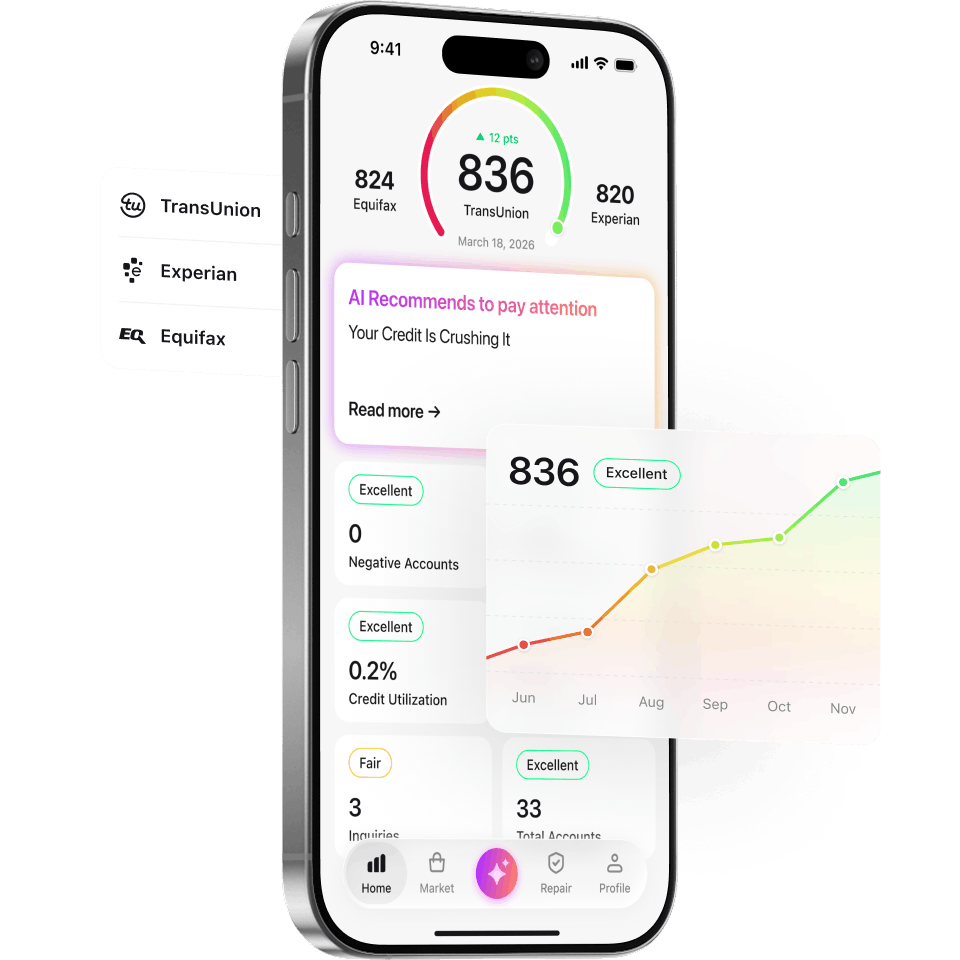
Want to know exactly what moved your score and catch reporting errors the moment they appear? Download Credit Booster AI, free on iOS and Android. It monitors all three bureaus, explains every score change in plain English, flags accounts that closed with errors, and generates dispute letters when something reports wrong, so a routine payoff dip never turns into a lasting problem.
Loving This Info? You'll Love Our App.
Everything you just read, plus AI-powered tools to understand and master your credit. Free to start.
Get the AppFrequently Asked Questions
Why did my credit score drop after paying off my car loan?
Paying off the loan closes the account. If it was your only open installment account, your credit mix thinned, and the account stopped contributing on-time payments to your active file. Scoring models reward open accounts being managed well, so losing one often causes a temporary dip, commonly somewhere in the range of 5 to 30 points depending on your file.
Why did my credit score go down when I paid off my student loans?
Same mechanics as any installment payoff. Student loans are often the oldest accounts on a young file and sometimes the only installment accounts. Closing them can remove your only active installment tradeline and, on VantageScore models, immediately shrink the age calculation. On FICO models the closed account keeps counting toward average age for up to 10 years, so the age hit is usually smaller than people fear.
How long does the score drop last after paying off a loan?
For most people the dip is temporary and fades within a few months as the rest of the file keeps reporting on-time payments and low balances. There is no fixed timeline because every file is different, but if your score has not recovered within roughly 3 to 6 months, check your reports for something unrelated, like a utilization spike or a new derogatory mark.
Should I not pay off my loan just to protect my credit score?
No. Paying interest to rent a slightly higher score is almost never worth it. The drop is small and temporary, while the interest cost is real and permanent. The main exception is timing: if you plan to apply for a mortgage or another major loan within the next month or two, it can make sense to wait until after that application to pay off the loan.
Does paying off a personal loan early hurt your credit?
It can cause the same small, temporary dip as any loan payoff, because the account closes and stops contributing to your active credit mix. Early payoff itself is not penalized as an event. There is no scoring flag for paying early, and the paid-as-agreed account stays on your report as positive history for up to 10 years.
Does a paid off loan stay on my credit report?
Yes. An account closed in good standing generally remains on your credit report for up to 10 years from the closure date, and its on-time payment history keeps helping you the entire time. Only accounts with negative history fall off faster, typically 7 years from the first delinquency.
Why did my credit score drop 30 points after paying off debt?
A drop that size usually means the payoff coincided with something else, like a credit card balance reporting higher that month, a new hard inquiry, or a thin file where the paid-off loan was the only installment account. Pull all three reports and compare them to last month before assuming the payoff alone did it.
Will my credit score go back up after paying off a loan?
Almost always, yes. As your open accounts keep reporting on-time payments and your utilization stays low, the dip typically fades within a few months. If you want to speed it up, keep card balances under 30 percent of limits, ideally under 10 percent, and consider adding a small installment account if the payoff left you with none.