2026 Credit Score Changes: What Borrowers Must Do
The smartest move in 2026 is simple: keep doing the basics well, then clean up the parts of your file that newer scoring models actually reward. The latest credit reporting changes 2026 aren’t rewriting the rules of credit so much as expanding what lenders can see, especially in mortgages, so borrowers with steady rent, utility, and telecom payments have more ways to show reliability.[2][5][6][7]
What the 2026 credit score changes actually mean
The biggest 2026 credit score changes are about which score lenders can use, what data gets counted, and how disputes and fraud are handled.[2][4][5][6][7]
For mortgage borrowers, the Federal Housing Finance Agency is pushing Fannie Mae and Freddie Mac toward newer models like VantageScore 4.0 and FICO 10T, while allowing approved lenders in an interim phase to choose between Classic FICO and VantageScore 4.0 for loans sold to the Enterprises.[6][7] Fannie Mae has also announced a limited rollout of VantageScore 4.0 through tri-merge reports, with older Classic FICO use still required for lenders not in the rollout.[6]
That matters because these newer models look beyond a single snapshot. They place more weight on patterns over time, not just the balance sitting on your card the day you apply.[2][4][5] So if you’ve been steadily paying balances down for months, that trend can help. If your balances have been climbing for two years, that trend can hurt. Pretty straightforward, right?
What changed in 2026, and what didn’t
Here’s the short version: the score may change, but the winning habits mostly don’t.[2][3][5]
What’s changing:
- Mortgage scoring models are modernizing, with VantageScore 4.0 and FICO 10T gaining ground.[6][7]
- Alternative data like rent, utilities, and telecom payments may now help some consumers score better, especially if they have thin files.[1][2][5][6]
- BNPL plans are beginning to show up on credit reports, so on-time payments can help and missed payments can hurt.[1][2][3][5]
- Paid medical collections and medical debts under $500 are being removed from reports, which reduces surprise damage for a lot of borrowers.[2][3][5]
- Dispute and identity-theft protections are getting stronger, with faster timelines and better documentation standards.[2][4][5]
What isn’t changing:
- Payment history is still king.[2][3][5]
- Credit utilization still matters a lot, and keeping revolving balances below about 30% is still the common target.[2][5]
- Length of credit history still helps older, well-managed accounts.[2][5]
- New credit applications can still drag your score down.[2][5]
- Credit mix still matters, but it’s not worth opening random accounts just to chase it.[2][5]
If you want the practical takeaway, here it is: 2026 rewards consistency more than cleverness.
New credit score rules 2026: the big shifts borrowers need to understand
1. Mortgage lenders are getting new score options
The biggest mortgage credit score updates 2026 are happening because FHFA is modernizing the system used by Fannie Mae and Freddie Mac.[6][7] In plain English, that means more lenders can use newer scores that better recognize stable behavior, including rent history and long-term payment patterns.[6][7]
That’s a win for people with thin files. If you’ve been paying rent on time for three years but only have one credit card, newer models may finally give your file more substance.[1][2][5][6] But don’t misread that as “traditional credit no longer matters.” It still does.
2. Rent, utilities, and telecom can help more than before
VantageScore 4.0 and related scoring changes can include rent, utility, and telecom payment history.[1][2][5][6] That means the bills you’ve been paying every month might finally count in a way that old models ignored.
For example, if you have no auto loan and only one starter card, a spotless two-year rent record can help support a stronger profile. That’s especially useful for first-time buyers and younger borrowers.[1][5] Still, these payments don’t replace the impact of credit cards, installment loans, or mortgage history. They just fill in gaps.
3. BNPL is no longer invisible
Buy Now, Pay Later is changing fast. Multiple 2026 updates say BNPL plans will start appearing on credit reports and can feed into FICO-based scores.[1][2][3][5]
That cuts both ways.
- If you make every payment on time, BNPL can help build history.[1][3][5]
- If you stack too many plans and miss even one payment, the damage can follow you.[1][3][5]
Here’s the problem: BNPL feels small, so people overuse it. Five little installments across three shopping apps can quietly become a mess. Lenders may now see that pattern more clearly.
4. Medical debt has less power now
Paid medical collections and debts under $500 are being removed from credit reports, which is a real improvement for borrowers who were knocked off course by one-off healthcare bills.[2][3][5] That doesn’t mean medical debt no longer matters at all. Larger unpaid collections can still show up and still hurt.[2][3][5]
This change mostly helps people who were never truly risky, just unlucky.
What borrowers must do before applying for credit in 2026
If you’re planning a mortgage, auto loan, or major refinance, follow this plan.
1. Start 6 to 12 months early
If a major loan is on your radar, give yourself at least 6 to 12 months to prepare.[2][4][5][7] Newer scoring models look at trends over time, so a short burst of good behavior right before applying won’t do as much as sustained progress.
A borrower who lowers card balances every month for eight months looks stronger than one who makes a big last-minute payment two weeks before applying.
2. Pull all three credit reports and fix errors fast
Check your reports from the federally authorized portal and review each bureau carefully for mistakes, duplicate accounts, old collections, and fraud.[2][4][5] Then dispute what’s wrong.
This matters more in 2026 because updates to reporting rules are improving dispute timelines and documentation standards.[2][3][4][5] If a bad account is inaccurate, don’t sit on it.
Look for:
- Accounts you never opened
- Incorrect late payments
- Duplicate collections
- Wrong balances
- Closed accounts still reporting as open
- Medical collections that should already be removed
If you spot an error, dispute it immediately and keep copies of everything.
3. Keep utilization low, really low if a mortgage is coming
Utilization still matters a lot, and this is one area where borrowers get sloppy.[2][5] If you want a strong score, keep revolving balances below 30% of your limits. If you’re preparing for a mortgage, getting closer to 10% is often better.
Example:
- Card limit: $10,000
- Balance at statement close: $3,200
- Utilization: 32%
That’s not terrible, but it’s above the old comfort zone. If you can bring that down to $900 or $1,000, your profile usually looks cleaner.
A simple rule: don’t let a single card get close to maxed out, even if your total utilization looks decent.
4. Never miss a payment
Payment history is still the biggest factor, and a late payment can hurt more than almost anything else.[2][3][5] Set autopay for at least the minimum on every account. Why risk a mistake over something that takes five minutes to automate?
If your income is uneven, pay early. If your due dates are clustered, spread them out. If you’re juggling multiple bills, build a calendar now, not after you’re already stressed.
5. Stop opening unnecessary accounts
New credit still matters, and too many applications in a short period can drag your score down.[2][5] That includes cards you don’t really need, store accounts you barely use, and random financing offers.
A smart borrower asks: Do I need this account, or am I just chasing a temporary score bump?
Usually, the answer is obvious.
6. Leave old accounts open unless there’s a real reason to close them
Older accounts help your length of credit history, and closing old cards can also hurt utilization.[2][5] If an old no-fee card is sitting in your wallet collecting dust, keeping it open is often the better move. If your file is thin and you need a starter account that reports to all three bureaus, one of the best secured credit cards for building credit can add positive history without much risk.
That doesn’t mean you should keep every account forever. But don’t close your oldest card right before a mortgage application. That’s a self-inflicted wound.
7. Use rent reporting if your file is thin
If you have strong rent, utility, or telecom payment history, ask whether your lender uses a model that recognizes it and whether rent reporting is available.[1][2][5][6] This can be especially useful for renters who don’t yet have much traditional credit.
This is one of the best 2026 credit score changes for thin-file borrowers. It won’t turn a weak file into a perfect one overnight, but it can create a more complete picture.
8. Be careful with BNPL
Treat BNPL like real debt, because lenders increasingly do.[1][2][3][5] Keep the number of active plans manageable, and don’t use BNPL to paper over cash-flow problems.
A good rule: if you’d struggle to track the payment in a spreadsheet, you probably have too many BNPL plans already.
9. Check medical collections before they check you
Since paid medical collections and small medical debts under $500 are being removed, make sure your reports actually reflect that.[2][3][5] If a medical item is still showing when it shouldn’t be, dispute it.
For larger unpaid medical bills, negotiate a payment plan or settlement before it becomes a bigger problem.
How to prepare for mortgage credit score updates 2026
Mortgage borrowers have the most to gain, and the most to lose if they guess wrong about the rules.[6][7][8]
Here’s the move:
- Ask your lender which score model they use.[2][4][5]
- Don’t assume the score you see in an app is the score they’ll use.[2][4][5]
- Focus on the universal factors that help across every model.[2][5]
- Make your file look stable, not just temporarily polished.
If your app shows a 728 but your mortgage lender sees something different, that’s not unusual. Different models can produce different numbers, and newer mortgage systems are still rolling out.[2][4][5][6][7]
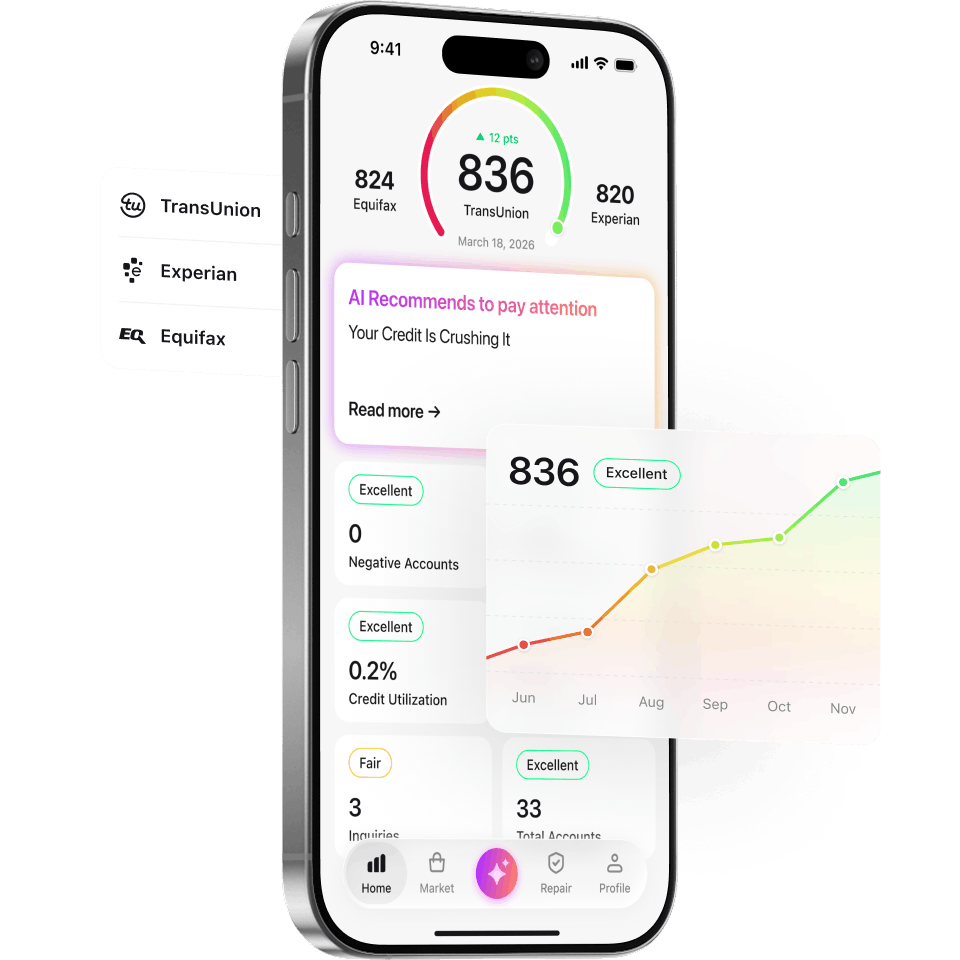
Credit Booster AI can help here by analyzing your reports, spotting errors, generating dispute letters, and tracking progress. That’s useful because the hard part usually isn’t knowing what to do, it’s staying organized long enough to do it well.
Download Credit Booster AI, free on iOS and Android.
What lenders still care about most in 2026
New models, same fundamentals.
Lenders still want to see:
- On-time payments
- Low revolving balances
- Older, stable accounts
- Limited recent inquiries
- A healthy mix of credit over time[2][3][5]
That’s why the best 2026 strategy is not chasing every new scoring headline. It’s building a file that looks boring in the best possible way. Predictable. Stable. Low-drama.
And honestly? That’s what good credit has always been.
A practical 30-day action plan
If you want a simple starting point, do this over the next month:
- Pull all three credit reports and list every negative item.[2][4][5]
- Dispute any error that doesn’t belong there.[2][3][4][5]
- Turn on autopay for every account.
- Lower card balances before the next statement closes.
- Stop using BNPL unless it’s truly necessary.[1][3][5]
- Ask your landlord or servicer whether rent reporting is available.[1][2][5]
- Keep old accounts open if they’re helping your age of credit.
- Avoid new credit applications unless you really need them.
- Review medical collections and confirm removals where applicable.[2][3][5]
- If you’re buying a home, ask the lender which model they use.[2][4][5][6][7]
Related Resources
- FICO vs VantageScore explained
- credit score requirements for mortgages
- how to check your credit score for free
Frequently Asked Questions
Are the 2026 credit score changes the same for every lender?
No. 2026 is a transition year, especially for mortgages, and some lenders will use newer models while others still rely on older ones.[2][5][6][7] That’s why you should focus on strong habits that work across all scoring systems.
Will rent payments help my credit score in 2026?
They can, depending on the scoring model and lender.[1][2][5][6] Newer models like VantageScore 4.0 can include rent, utilities, and telecom payments, which helps borrowers with thin credit files.
Does Buy Now, Pay Later affect credit now?
Yes, BNPL plans are starting to appear on credit reports and can affect scores.[1][2][3][5] On-time payments can help, but missed payments can hurt just like other forms of credit.
Is medical debt gone from credit reports completely?
No. Paid medical collections and debts under $500 are being removed, but larger unpaid medical debts can still appear.[2][3][5] That’s why you should still review your reports carefully.
What’s the fastest way to improve my score before a mortgage?
Lower your card balances, avoid new credit applications, and make every payment on time.[2][5] If you have time, start 6 to 12 months early so newer models can see a positive trend.
Do I need perfect credit to get approved in 2026?
No, but stronger credit still helps a lot, and lenders also look at income, debt-to-income ratio, savings, and down payment.[2][5] A better score improves your odds, but it’s only one piece of the file. Need professional help? CreditBooster.com has been helping clients rebuild their credit since 2009.
Monitor your credit score and protect your identity with Credit Club.
Loving This Info? You'll Love Our App.
Everything you just read, plus AI-powered tools to understand and master your credit. Free to start.
Get the AppFrequently Asked Questions
Are the 2026 credit score changes the same for every lender?
No. 2026 is a transition year, especially for mortgages, and some lenders will use newer models while others still rely on older ones. That’s why you should focus on strong habits that work across all scoring systems.
Will rent payments help my credit score in 2026?
They can, depending on the scoring model and lender. Newer models like VantageScore 4.0 can include rent, utilities, and telecom payments, which helps borrowers with thin credit files.
Does Buy Now, Pay Later affect credit now?
Yes, BNPL plans are starting to appear on credit reports and can affect scores. On-time payments can help, but missed payments can hurt just like other forms of credit.
Is medical debt gone from credit reports completely?
No. Paid medical collections and debts under $500 are being removed, but larger unpaid medical debts can still appear. That’s why you should still review your reports carefully.
What’s the fastest way to improve my score before a mortgage?
Lower your card balances, avoid new credit applications, and make every payment on time. If you have time, start 6 to 12 months early so newer models can see a positive trend.
Do I need perfect credit to get approved in 2026?
No, but stronger credit still helps a lot, and lenders also look at income, debt-to-income ratio, savings, and down payment. A better score improves your odds, but it’s only one piece of the file.